 Atlas of China
Baoji 宝鸡Bǎojī
The Zhou homeland, a Buddha's finger relic and the Qinling's highest peak
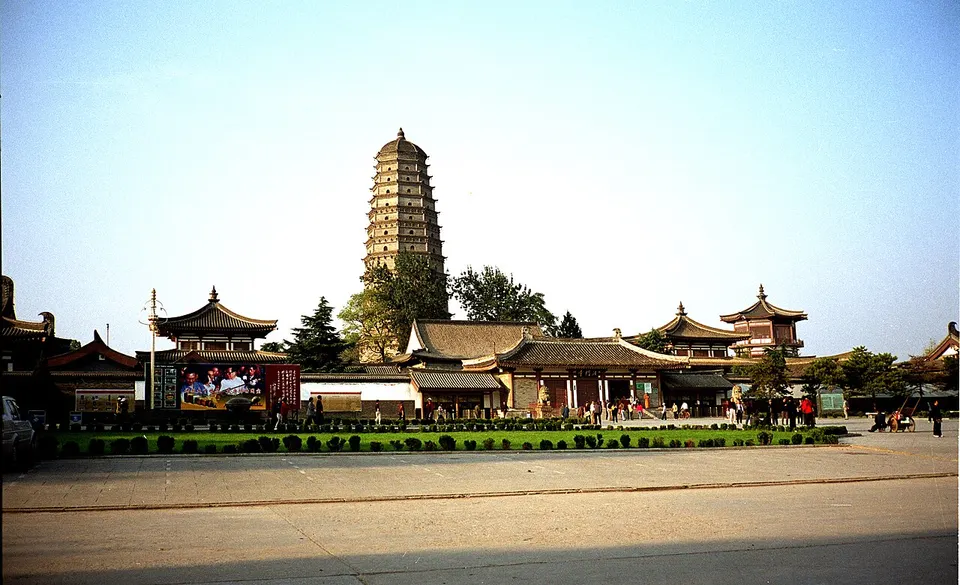
About Baoji
Baoji lies at the western end of the Guanzhong plain, where the Zhou people rose on the farmland below Mount Qi. The Baoji Bronze Ware Museum shows the He zun, a Zhou ritual vessel whose inscription is the earliest known use of the word Zhongguo, today China's name for itself. Famen Temple keeps a relic venerated as a finger bone of the Buddha, found in a Tang crypt in 1987, and Mount Taibai, the Qinling's highest peak, rises in the south-east.
What to eat in Baoji
- Qishan saozi noodles (岐山臊子面)
- Xifeng liquor (西凤酒)
Featured places in Baoji
-
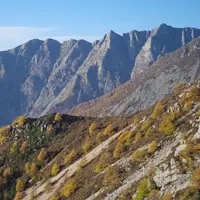
Mount Taibai 太白山
Forest roads and a cable car climb to 3,511 metres on the Qinling range's highest peak
-
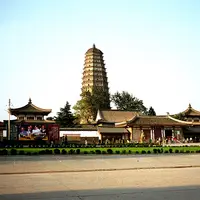
Famen Temple 法门寺
A Tang relic temple, the treasures of its sealed crypt and a 148-metre modern stupa
-
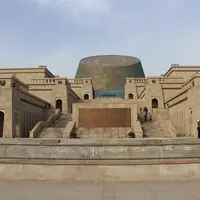
Baoji Bronze Ware Museum 宝鸡青铜器博物院
Zhou dynasty bronzes, led by the He zun and the earliest known written 'Zhongguo'
Listed sites in Baoji
22 sites in Baoji are on the official lists. Those with a page of their own link to it; the rest open as cards on the map.
- Changleyuan Wartime Industrial Site (Shenxin Cotton Mill) 长乐塬抗战工业遗址 4A scenic area · National heritage site · on the map
Remains of the Shenxin cotton mill that the Rong family's textile firm moved from Hankou to Baoji in 1938, during the war against Japan. - East Lake, Fengxiang 凤翔东湖 4A scenic area · on the map
A lake garden on the south-east edge of Fengxiang town that grew from an old pond called Yinfeng Chi ('Phoenix Drinking Pool'). - Feng County Revolutionary Memorial Hall 凤县革命纪念馆 4A scenic area · on the map
A memorial hall in Fengzhou opened in 2016 on the county's twentieth-century political history. - Fumei Campaign Memorial Hall 扶眉战役纪念馆 4A scenic area · on the map
A memorial hall and martyrs' cemetery at Changxing in Mei County for the Fumei Campaign of 10–14 July 1949, in which the People's Liberation Army defeated Hu Zongnan's Nationalist forces in the Wei valley between Fufeng and Mei County. - Guanshan Grassland 关山草原 4A scenic area · on the map
An upland of alpine meadow and forest in the Guanshan mountains on the Shaanxi–Gansu border, at Guanshan village in Tiancheng town, south-west Long County. - Jintai Taoist Temple 金台观 4A scenic area · National heritage site
A Taoist temple complex founded in the late Yuan or early Ming dynasty on the loess terrace above central Baoji, known through the tradition that Zhang Sanfeng, legendary founder of the Wudang school and of taijiquan, practised here. - Jiulong Mountain, Chencang 九龙山 4A scenic area · on the map
A mountain scenic area in western Chencang District whose nine converging peaks are said to resemble nine dragons, with red-sandstone Danxia cliffs rising to 1,910 m and forest. - Longmen Cave (Longmendong) 龙门洞 4A scenic area · on the map
A Taoist mountain sanctuary in Xinjichuan town north-west of Long County, where the Quanzhen master Qiu Chuji spent seven years in retreat in the late 12th century; the Longmen (Dragon Gate) school of Taoism, which honours him as its patriarch, takes its name from the place. - Palace of Nine Perfections (Jiucheng Palace) 九成宫 4A scenic area · National heritage site
Remains of a Sui and Tang summer palace in Linyou town: Emperor Wen of Sui built the Renshou Palace here in 593–595, Tang Taizong rebuilt it as the Jiucheng (Nine Perfections) Palace in 631, and a flood destroyed it in 836. - Qingfeng Gorge National Forest Park 青峰峡 4A scenic area · on the map
A national forest park in a Qinling gorge near Taochuan in Taibai County, with dense forest, streams and the Qingfeng Waterfall. - Red River Valley Forest Park 红河谷森林公园 4A scenic area · on the map
A forest park in Yingtou town, Mei County, on the north slopes of the Qinling below the main peak of Mount Taibai. - Shuicheng Three Kingdoms Town 水城·三国小镇 4A scenic area · on the map
A modern tourist town at Caijiapo in southern Qishan County, built in old style around canals and ponds on a Three Kingdoms theme. - Temple of the Duke of Zhou (Zhou Culture Scenic Area) 周公庙 4A scenic area · National heritage site · on the map
A temple to the Duke of Zhou, the royal regent who helped consolidate the early Zhou kingdom, at the foot of Fenghuang Hill north-west of Qishan town; its present halls date from the Ming and Qing dynasties. - Tongtianhe National Forest Park 通天河国家森林公园 4A scenic area · on the map
A national forest park of wooded mountains and streams in the Qinling range of northern Feng County, in Tangzang town. - Xiaozai Temple 消灾寺 4A scenic area · on the map
A Buddhist temple complex on Douji Hill at Fengzhou, facing the old town of Fengzhou across the river. - Beishouling Neolithic Site 北首岭遗址 National heritage site
A Neolithic village site of about 6 ha on a terrace on the west bank of the Jinling River in northern Baoji, occupied from about 5100 to 3790 BC. - Cishan Temple Grottoes 慈善寺石窟 National heritage site · on the map
A Buddhist cave temple about 5 km east of Linyou town, begun in the Renshou era of the Sui (early 600s), when the court summered at the nearby palace, and extended under the Tang. - Fufeng City God Temple (Fufeng County Museum) 扶风城隍庙 National heritage site · on the map
A City God temple in the centre of Fufeng town, founded in 1370 and enlarged and restored through the Ming and Qing, which now houses the Fufeng County Museum. - Taiping Temple Pagoda, Qishan 太平寺塔 National heritage site · on the map
A nine-storey octagonal brick pagoda built in 1088 under the Northern Song, about 28 m tall, the sole survivor of Taiping Temple in Qishan town. - Tomb of Li Maozhen, Prince of Qin 大唐秦王陵 National heritage site · on the map
The tombs of Li Maozhen (856–924), a late-Tang warlord who ruled the state of Qi from Fengxiang and was made Prince of Qin in the year he died, and of his wife Lady Liu: two separate tombs in one precinct, excavated in 1999 and 2001. - Yongcheng Site and Tomb of Duke Jing of Qin 秦雍城遗址 National heritage site · on the map
Yongcheng, in present-day Fengxiang, was the capital of the state of Qin for more than two centuries from 677 BC; its walled city, palace and temple sites and the cemetery of the Qin dukes lie mostly beneath farmland. - Zhouyuan Site and Baoji Zhouyuan Museum 周原遗址 National heritage site · on the map
The Zhouyuan plain at the foot of Mount Qi was the homeland and early capital of the Zhou people and remained a political and ritual centre through the Western Zhou; the site covers about 30 km² across Fufeng and Qishan counties.
Getting to Baoji
Train, flight and driving times from the cities most visitors come from, with stations, fares and how many run a day; each opens the full comparison.
On the map
Open Baoji on the illustrated map to see its outline, its places and listed sites together, and to add them to a trip.
Open Baoji on the map