 Atlas of China
Fuzhou 福州Fúzhōu
Banyan shade, scholars' lanes and jasmine tea along the lower Min River
About Fuzhou
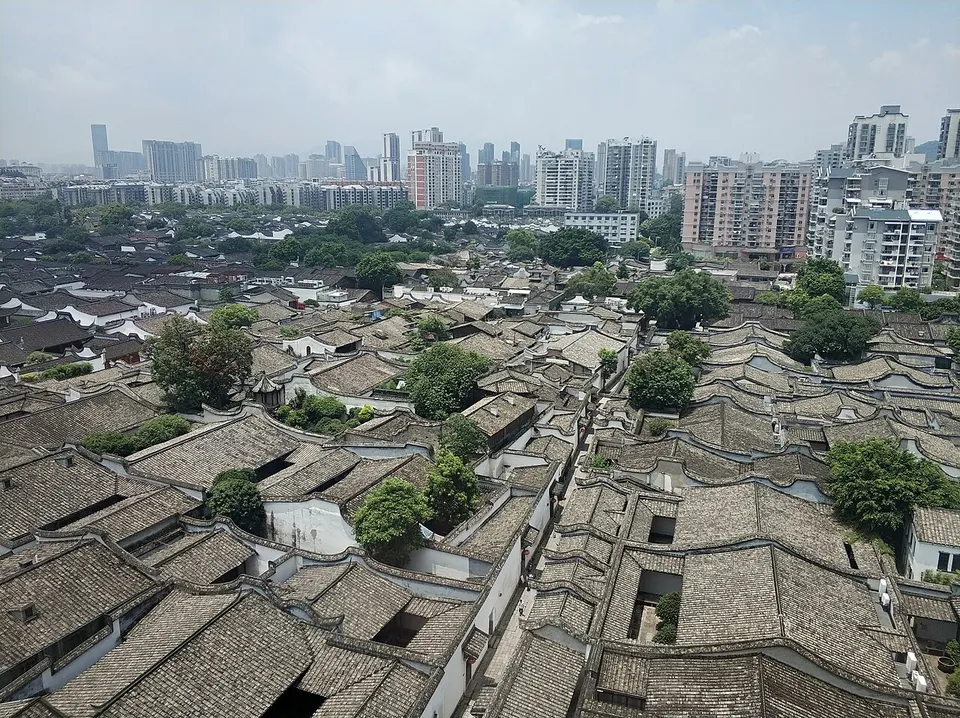
Fuzhou, the provincial capital, has been nicknamed the Banyan City since its prefect had households plant banyan trees in 1065. Its old heart is Sanfang Qixiang, walled lanes of scholar-official houses such as the translator Yan Fu's, while the main hall of Hualin Temple, built in 964, is regarded as the oldest timber building south of the Yangtze. Downstream, Mawei keeps the workshops of the Foochow Arsenal, the Qing navy yard, and on Pingtan Island glowing plankton sometimes light the surf at Tannan Bay.
What to eat in Fuzhou
- Buddha Jumps Over the Wall (佛跳墙)
- Fuzhou fish balls (福州鱼丸)
- Jasmine tea (茉莉花茶)
Listed sites in Fuzhou
38 sites in Fuzhou are on the official lists. Those with a page of their own link to it; the rest open as cards on the map.
- Sanfang Qixiang 三坊七巷 5A scenic area · National heritage site
Fuzhou's best-preserved old quarter, a grid of three lanes and seven alleys either side of pedestrianised Nanhou Street that keeps the walled-ward street plan laid out when the city walls were built in the late Tang. - 68 Nautical Miles Scenic Area 68海里 4A scenic area · on the map
A coastal scenic area at Dong'ao village on Pingtan Island, named for the 68 nautical miles (about 126 km) of sea that separate Pingtan, the closest point of mainland China to Taiwan Island, from Hsinchu on the other side of the strait. - Baijigou Waterfalls 百漈沟 4A scenic area · on the map
A gorge just over 1 km long in Wutong town, western Yongtai, named for the scores of waterfalls large and small that pour into it, with walkways cut along the cliffs through a sinkhole-like canyon. - Fuzhou National Forest Park 福州国家森林公园 4A scenic area · on the map
A forest park of about 860 hectares in the hills on Fuzhou's northern edge, founded in 1960 as the city arboretum, also run as Fuzhou Botanical Garden and the first national forest park in Fujian. - Gui'an Xintiandi Resort 贵安新天地 4A scenic area · on the map
A large resort and residential development built from 2011 by a property group in the Gui'an hot-spring area of Lianjiang county and rated 4A in 2014. - Gushan (Drum Mountain) 鼓山 4A scenic area · National heritage site · on the map
A forested mountain on Fuzhou's eastern edge, rising to 919 m, whose slopes hold Yongquan Temple, founded in 783, and more than 300 inscriptions carved into the rock from the Song dynasty onwards, among them calligraphy by Cai Xiang and Zhu Xi. - Luoyuan Bay Ocean World 罗源湾海洋世界 4A scenic area · on the map
A marine park in the Luoyuan Bay waterfront new town, built by a property group as part of a large resort and residential development and opened in 2015. - Mawei Shipyard Heritage Area (Foochow Arsenal) 船政文化景区 4A scenic area · National heritage site
The site of the Foochow Arsenal, the Qing navy yard and naval school founded at Mawei in 1866 with French engineers, which built steam transports and gunboats and trained many of the officers of the late-Qing Beiyang Fleet. - Minjiang Estuary National Wetland Park 闽江河口国家湿地公园 4A scenic area · on the map
A 282-hectare wetland park of tidal flats and restored fish ponds at the mouth of the Min River in north-east Changle, part of an estuary wetland that joined China's World Heritage tentative list in 2022 and became a Ramsar site in 2023. - Minyue Water Town 闽越水镇 4A scenic area · on the map
A modern themed water town on the Min River at Zhuqi in Minhou, whose first phase opened in 2021 and which was rated 4A in 2024. - Oulebao Ocean World, Yongtai 欧乐堡海洋世界 4A scenic area · on the map
A marine theme park in Geling town with aquarium halls of sea and polar animals, several theatres for staged marine-animal shows, and a water park next door. - Qingyun Mountain 青云山 4A scenic area · on the map
A national key scenic area of deep gorges cut into volcanic rock in Linglu township, south of Yongtai town, made up of sections such as the Yuntian stone corridor, Baima Gorge, Shuilian Palace and Qinglong Waterfall, each with trails past cascades, pools and cliffs. - Ruiyan Mountain and Maitreya Statue 瑞岩山 4A scenic area · National heritage site
A hill at Haikou town east of Fuqing whose eastern foot holds a laughing, pot-bellied Maitreya Buddha about 9 m tall, carved into the rock between 1341 and 1368 and described as the largest Yuan-dynasty Maitreya in China. - Shangxiahang Historic District 上下杭 4A scenic area
Two parallel streets near the Min River in Taijiang district, Shanghang and Xiahang, that grew from riverside landing places into Fuzhou's main trading quarter after the city was opened as a treaty port in the 1840s. - Shizhu Mountain 石竹山 4A scenic area · on the map
A Taoist holy mountain west of Fuqing known for its long-standing custom of dream-seeking, in which pilgrims sleep overnight in a cave shrine hoping for a dream that answers their prayers. - Tannan Bay and Haitan Ancient City 坛南湾、海坛古城 4A scenic area · on the map
A combined scenic area in south-east Pingtan made up of Tannan Bay, a sweep of fine white sand with more than 25 km of sandy shore running south to Jiangjun Hill, and Haitan Ancient City, a commercial complex of shops and restaurants built in the style of an old walled town. - Xishan Hot Spring Resort 溪山温泉度假村 4A scenic area · on the map
A hot-spring resort in the Gui'an hot-spring area of Lianjiang county, with a hotel, thermal pools and leisure facilities. - Yunding Scenic Area 永泰云顶 4A scenic area · on the map
A mountain-top scenic area on the summit plateau of Qingyun Mountain in Linglu township, most of it above 1,100 m, opened in 2010. - Black Pagoda (Wuta) 乌塔 National heritage site
A seven-storey octagonal granite pagoda at the eastern foot of Wushan Hill, begun in 941 by Wang Yanxi, ruler of the Min kingdom, and left at seven of its nine planned storeys when he was assassinated in 944. - Chen Taiwei Palace 陈太尉宫 National heritage site
A village temple at Qianxi in Zhongfang town that began in 909 as the ancestral hall of Chen Su, who had come to Fujian with Wang Shenzhi's army, and later became a shrine to him and to a descendant honoured for fighting the Mongols. - Fuzhou Confucian Temple 福州文庙 National heritage site
The city's temple to Confucius, on a site that has held Fuzhou's government school since the Tang and its Confucian temple since the Song, rebuilt after a fire in 1851–52 and restored in the 2000s after decades as a school, a shopping arcade and a children's palace. - Haitan Strait Underwater Sites 海坛海峡水下遗址 National heritage site · on the map
The Haitan Strait between Pingtan Island and the mainland holds shipwrecks and lost cargo from the Five Dynasties to the Qing, among them the Wanjiao No. 1 wreck, whose excavation is described as the first large-scale underwater excavation China carried out entirely on its own. - Hualin Temple 华林寺 National heritage site
A small temple compound at the foot of Pingshan Hill whose main hall, built in 964 when Fuzhou was ruled by the Wuyue kingdom, is regarded as the oldest surviving timber building south of the Yangtze. - Jiutouma Residences 九头马民居 National heritage site
A walled Qing-dynasty residential complex in Qiyang village, Heshang town, built by Chen Lihuan and his son from the Jiaqing era until about 1872 and named after nine large boulders scattered through it. - Keqiutou Site Museum 壳丘头遗址 National heritage site · on the map
A group of Neolithic to Shang-period settlement sites in northern Pingtan Island, about 7,500 to 3,000 years old, studied as possible early links in the spread of Austronesian-speaking peoples to Taiwan and across the Pacific. - Lin Zexu Memorial Hall 林则徐纪念馆 National heritage site · on the map
The ancestral shrine of Lin Zexu, the Qing commissioner who forced foreign merchants to hand over their opium and destroyed it at Humen in 1839, an act that led to the First Opium War. - Lingji Palace Stele 灵济宫碑 National heritage site · on the map
A Ming imperial stele 6.2 m tall on a tortoise base inside Lingji Palace at Qingpu village, a temple to the Southern Tang princes Xu Zhizheng and Xu Zhi'e said to date from 945. - Longjiang Bridge, Fuqing 龙江桥 National heritage site · on the map
A Song-dynasty stone beam bridge at Haikou, built between 1113 and 1124 by monks of Taiping Temple, that spans 476 m across the Longjiang estuary on 39 boat-shaped piers. - Luoxing Pagoda 罗星塔 National heritage site
A seven-storey octagonal stone pagoda on Luoxing Hill above the Min River at Mawei, rebuilt in the 1620s on the site of a Song-dynasty tower and long used as a landmark by ships. - Mingshan Shi Cave Temple 名山室 National heritage site · on the map
A Buddhist cave temple on Gaogai Mountain in Dayang town, founded in 888 and given its name by the Min king in the late 920s, with timber halls built into a series of rock caves. - Shengshou Pagoda 圣寿宝塔 National heritage site
A 27.4 m seven-storey octagonal stone pagoda imitating timber construction, built between 1096 and 1117 on Taping Hill in what is now Zheng He Park, Changle. - Tanshishan Site Museum 昙石山遗址 National heritage site · on the map
A Neolithic to Bronze Age settlement mound on the north bank of the lower Min River, about 5,500 to 2,700 years old, that gave its name to the Tanshishan culture, the first archaeological culture identified in Fujian. - Tingjiang Fort 亭江炮台 National heritage site · on the map
The remains of a Qing-dynasty gun battery at Nanban village in Tingjiang town, on the Min River downstream of Mawei, part of the defences along the river route to Fuzhou. - Tomb of Lin Zexu 林则徐墓 National heritage site · on the map
The family tomb at the foot of Jinshi Hill, on Fuzhou's northern outskirts, where Lin Zexu, the official remembered for destroying opium at Humen in 1839, lies with his parents, wife, brother and sister-in-law. - Tombs of Qing Soldiers Who Served in Taiwan, Min'an 闽安戍台将士墓群 National heritage site · on the map
A hillside cemetery on Hutou Hill at Min'an, the old garrison town on the lower Min River, where 135 men of the Qing navy's Min'an garrison are buried, each under a headstone giving his name and home town. - Wushan and Yushan Hills 乌山、于山 National heritage site · on the map
Two small hills in the old city centre that, with Pingshan, make up Fuzhou's traditional 'Three Hills', their rocks covered with inscriptions carved from the Tang dynasty to modern times. - Xianying Palace Clay Sculptures 显应宫 National heritage site · on the map
A Mazu temple in Xianqi village, Zhanggang, founded in 1138 and buried by drifting sand in the late Qing, then found again in 1992 when villagers dug house foundations. - Yongtai Fortified Manors (Zhuangzhai) 永泰庄寨 National heritage site · on the map
Five Qing-dynasty fortified family compounds, known locally as zhuangzhai, in Yongtai's mountain villages, each a large timber-built residence covering roughly 3,000 to 10,000 m².
Getting to Fuzhou
Train, flight and driving times from the cities most visitors come from, with stations, fares and how many run a day; each opens the full comparison.
- Xiamen 厦门 high-speed train 56 min, 137 a day, from ¥126; one nonstop flight a day, 50 min in the air
On the map
Open Fuzhou on the illustrated map to see its outline, its places and listed sites together, and to add them to a trip.
Open Fuzhou on the map