 Atlas of China
Shigatse 日喀则Rìkāzé
Everest's north face, the Panchen Lamas' seat and the Kumbum of Gyantse
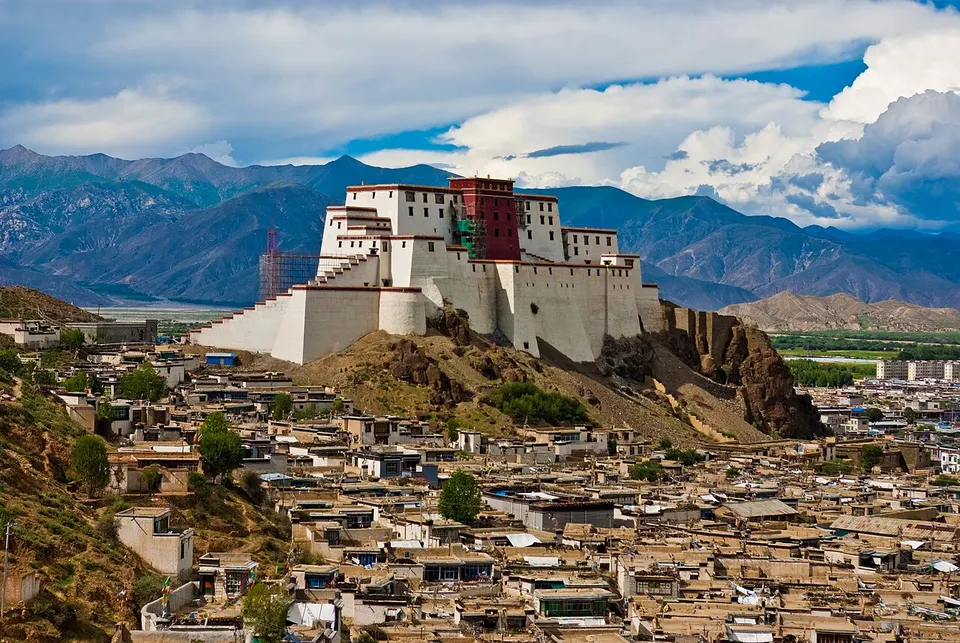
About Shigatse
Shigatse, the old heartland of Tsang in south-western Tibet, takes in the north face of Mount Everest, where Rongbuk Monastery stands near the base camp in Tingri County. In the city, Tashilhunpo Monastery, founded in 1447, is the traditional seat of the Panchen Lamas, and Gyantse to the south-east has its hilltop dzong and the Kumbum of Palcho Monastery, a tiered stupa lined with chapels. Farther west lie Sakya Monastery, seat of the Sakya school, and the Gyirong Valley, long a route to Nepal.
Featured places in Shigatse
-
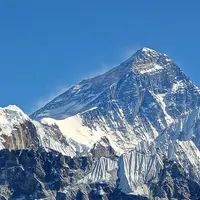
Everest (Qomolangma) Base Camp 珠峰大本营
Face the full north wall of Everest from around 5,000 metres
-
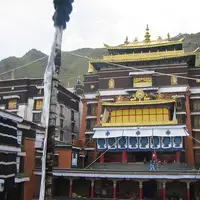
Tashilhunpo Monastery 扎什伦布寺
The seat of the Panchen Lamas, with a 26-metre gilded Maitreya and a giant thangka wall
Listed sites in Shigatse
16 sites in Shigatse are on the official lists. Those with a page of their own link to it; the rest open as cards on the map.
- Chongba Yumtso 崇巴雍错 4A scenic area · on the map
Chongba Yumtso is a glacial lake at about 4,570 m on the north side of the Himalaya in southern Kangmar County, and the source of the Nyang River that flows down past Gyantse to Shigatse. - Gyantse Dzong 江孜宗山 4A scenic area · National heritage site
Gyantse Dzong is a fortress on a steep rock above Gyantse that was the seat of one of Tibet's major districts; the castle dates mainly from the late 14th century. - Gyirong Valley 吉隆沟 4A scenic area · on the map
The Gyirong Valley cuts deep into the central Himalaya, falling to about 2,800 m around Gyirong town, where dense forest and farming villages lie beneath snow peaks. - Langdong Manor and Langba Village 朗东庄园 4A scenic area · on the map
Langba, a listed traditional village on the upper Nyang River in Kangmar County, was renovated and opened as a scenic area in 2023 around Langdong Manor, an aristocratic estate house more than 500 years old. - Qilin Gorge Earth Forest 奇林峡 4A scenic area · on the map
Qilin Gorge, also known as the Mu Village earth forest, is a valley in Qiongzi township on the north side of the Himalaya where meltwater has eroded the soft sediments into crowded ranks of earth pillars and fins. - Sakya Monastery 萨迦寺 4A scenic area · National heritage site
Sakya Monastery, founded in 1073 by Khön Könchok Gyalpo, is the seat of the Sakya school of Tibetan Buddhism, whose leaders governed Tibet under Yuan-dynasty overlordship in the 13th and 14th centuries. - Aiwang (Iwang) Temple 艾旺寺 National heritage site · on the map
Aiwang Temple, in Samada township south of Kangmar, was founded in the 11th century, early in the revival of Buddhism in Tibet, and later passed to the Gelug school. - Chöde Temple, Drolma Lhakhang and Tang Envoy Inscription 曲德寺、卓玛拉康、大唐天竺使出铭 National heritage site · on the map
Three listed relics stand in and near Zongga, the county town of Gyirong: Chöde Temple, a Gelug monastery destroyed in the 1960s with a small chapel rebuilt on its ruins, and next to it Drolma Lhakhang, a Nyingma hall with finely carved wooden pillars and lion brackets that probably belonged to the royal city of the Gungthang kings. - Lin'en Cliff Carvings 林恩摩崖石刻 National heritage site · on the map
On a cliff at Sangga village in Ngamring County, 15th-century carvers cut Buddhist images and Tibetan inscriptions into the rock, among them the six-syllable mantra and a eulogy of a Shakyamuni image. - Nenying Monastery 乃宁曲德寺 National heritage site · on the map
Nenying Monastery, in the upper Nyang valley south of Gyantse, traces its founding to the Tibetan Empire and became a Gelug monastery in the 15th century; it is traditionally regarded as the birthplace of the Tibetan opera Nangsa Öbum. - Pala Manor 帕拉庄园 National heritage site · on the map
Pala Manor, the seat of the Pala family, who held high office in the old Tibetan government, is regarded as the only Tibetan aristocratic manor to survive largely intact. - Palcho Monastery 白居寺 National heritage site
Palcho (Pelkor Chöde) Monastery, below the hills on the north-western edge of Gyantse, was built from 1418 by the local ruler Rabten Kunzang Phag with the scholar Khedrup Je, and is unusual in housing Gelug, Sakya and Shalu communities side by side. - Phagpa Temple, Gyirong 帕巴寺 National heritage site · on the map
Phagpa Temple in the centre of Gyirong town is a four-storey tower temple of stone and timber with tiered eaves, flame-shaped copper corner fittings and a copper roof, built in a style that shows strong Nepalese influence. - Phuntsokling Monastery 平措林寺 National heritage site · on the map
Phuntsokling Monastery, near the Yarlung Tsangpo in Lhatse County, was founded in 1614 by the scholar Tāranātha as a centre of the Jonang school, with the support of the Tsang rulers. - Shalu Monastery 夏鲁寺 National heritage site
Shalu Monastery, founded in the 11th century in a side valley south-east of Shigatse, is the mother monastery of the small Shalu (or Butön) school, founded by its 14th-century abbot Butön Rinchen Drub, the scholar who edited the Tibetan Buddhist canon. - Site of the Yadong Customs House 亚东海关遗址 National heritage site · on the map
The Qing government opened a customs house here in 1894, at the meeting of two mountain streams south of present-day Yadong, after treaties with Britain made Yadong a trade mart on the route between Tibet and British India.
Getting to Shigatse
Train, flight and driving times from the cities most visitors come from, with stations, fares and how many run a day; each opens the full comparison.
- Lhasa 拉萨 high-speed train 2 h 4 min, 3 a day, from ¥64
Trips with Shigatse
- Tibet: Lhasa, Namtso and Everest Base Camp 7 days · Lhasa and Shigatse
On the map
Open Shigatse on the illustrated map to see its outline, its places and listed sites together, and to add them to a trip.
Open Shigatse on the map