 Atlas of China
Liaocheng 聊城Liáochéng
Canal 'water city' of Ming towers, merchant halls and donkey-hide gelatin
About Liaocheng
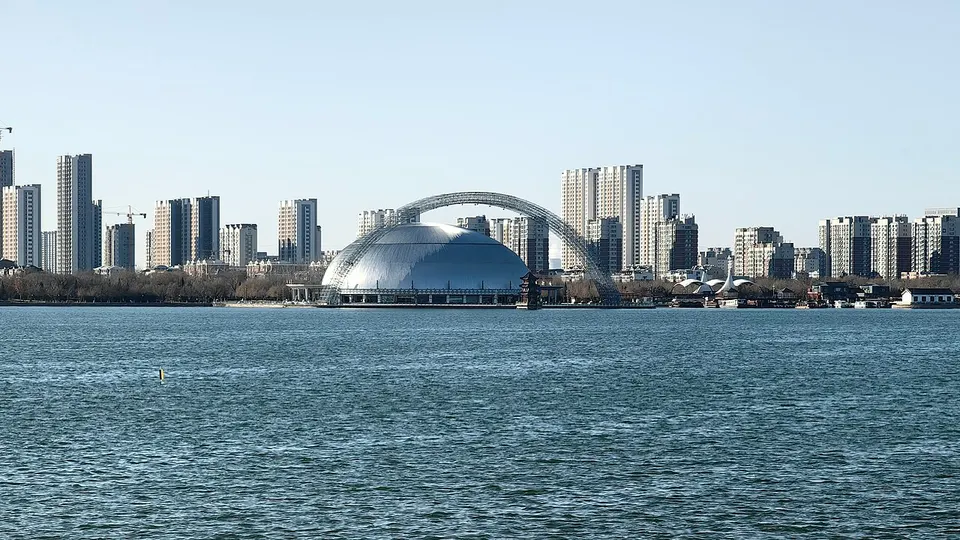
Liaocheng calls itself the Water City of the north, a Grand Canal trading town beside Dongchang Lake. In the old centre, Guangyue Tower, a wooden tower from the early Ming, stands over the streets, and merchants from Shanxi and Shaanxi paid for the Shanxi–Shaanxi Guildhall, begun in 1743. At Linqing, the Linqing Canal Customs House dates from 1429, and Dong'e county gave its name to ejiao, the donkey-hide gelatin used in Chinese medicine.
What to eat in Liaocheng
- Liaocheng smoked chicken (聊城熏鸡)
- Linqing board tofu (临清托板豆腐)
Listed sites in Liaocheng
16 sites in Liaocheng are on the official lists. Those with a page of their own link to it; the rest open as cards on the map.
- Dong'e Ejiao Culture Tourism Area 东阿阿胶文化旅游区 4A scenic area · on the map
This is a themed tourist complex run by the Dong'e Ejiao company around ejiao, the donkey-hide gelatin used in Chinese medicine that Dong'e is known for. - Dongchang Lake 东昌湖 4A scenic area · on the map
Dongchang Lake surrounds the square, walled old town of Liaocheng and began in 1070, in the Northern Song period, as the town moat. - Jingyang Ridge and Lion Tower 景阳冈·狮子楼旅游区 4A scenic area · National heritage site · on the map
This 4A area pairs two Water Margin sites in Yanggu County. - Jingyanggang Liquor Culture Scenic Area, Yanggu 景阳冈酒文化旅游景区 4A scenic area · on the map
This is a visitor attraction built since 2008 on the grounds of the Jingyanggang distillery in Yanggu, which makes baijiu, China's grain spirit, and it was rated a 4A area in December 2023. - Jiuzhouwa Rose Park 九州洼月季公园 4A scenic area · on the map
Jiuzhouwa is a city park in Liaocheng's high-tech zone built around rose gardens, combined with wetland and play areas, and it was rated a 4A scenic area in December 2024. - Kong Fansen Memorial Hall 孔繁森同志纪念馆 4A scenic area · on the map
This memorial hall in Liaocheng commemorates Kong Fansen, a local-born official who worked in Tibet from 1979 and became party secretary of Ali Prefecture, and who died in a road accident in November 1994 on a trip to Xinjiang. - Tomb of Cao Zhi, Yushan 鱼山曹植风景区 4A scenic area · National heritage site · on the map
This scenic area on Yushan hill beside the Yellow River holds the tomb of Cao Zhi, the poet-prince of the Three Kingdoms period; it was begun in 233 AD, opened by archaeologists in 1951 and has had its chamber sealed since. - Wanyuan Garden, Linqing 宛园 4A scenic area · on the map
Wanyuan is a modern Suzhou-style garden beside the Grand Canal in the north-west of Linqing, with pavilions, rockeries, ponds and brick, wood and clay carving made by craftsmen from Suzhou, according to the city's tourism pages. - Guangyue Tower 光岳楼 National heritage site
Guangyue Tower is a four-storey timber tower on a brick-and-stone base at the centre of Liaocheng's old town, begun in the early Ming dynasty as a lookout and about 33 m tall. - Han Family Cemetery, Shen County 韩氏家族墓地 National heritage site · on the map
This Tang-dynasty cemetery belongs to a family of military officials that included a governor of the Weibo region, and it preserves the stone figures that lined the tomb avenues: a carved horse, a groom, a warrior, a kneeling sheep and tiger, tomb markers and a spirit-way stele over 6 m tall topped with coiled dragons. - Iron Pagoda of Longxing Temple, Liaocheng 隆兴寺铁塔 National heritage site · on the map
This twelve-storey octagonal iron pagoda stands on a carved stone base beside the Grand Canal, in the old Longxing Temple precinct. - Linqing Canal Customs House 临清运河钞关 National heritage site · on the map
The Linqing Customs House was one of eight Ming and Qing customs posts on the Grand Canal and, by the Wanli era, the one collecting the most duty, about a quarter of the national total; founded in 1429, it is the only canal customs house to survive in China. - Shanxi–Shaanxi Guildhall, Liaocheng 聊城山陕会馆 National heritage site
This temple-guildhall was paid for by Shanxi and Shaanxi merchants who traded in Liaocheng; building began in 1743 and the complex reached its present form by 1809. - Tuqiao Lock Remains 土桥闸遗址 National heritage site · on the map
Tuqiao Lock is a Ming-dynasty canal lock, first built in 1471 on the Grand Canal and excavated in 2010–11 as the first lock on the canal to be fully uncovered. - Xiaocheng City Ruins, Guan County 萧城遗址 National heritage site · on the map
Xiaocheng is the earthen-walled site of a Song-period military town in Guan County, traditionally attributed to the Liao Empress Dowager Xiao in 1004; county officials call it the best-preserved Song–Liao fortress site south of the Great Wall. - Xingguo Temple Pagoda, Gaotang 兴国寺塔 National heritage site · on the map
This eleven-storey octagonal brick pagoda rises about 39 m above the street of Liangcun town in Gaotang County; the Qing gazetteer called it a Song pagoda, and a Ming stele records repairs in 1478.
On the map
Open Liaocheng on the illustrated map to see its outline, its places and listed sites together, and to add them to a trip.
Open Liaocheng on the map