 Atlas of China
Yan'an 延安Yán’ān
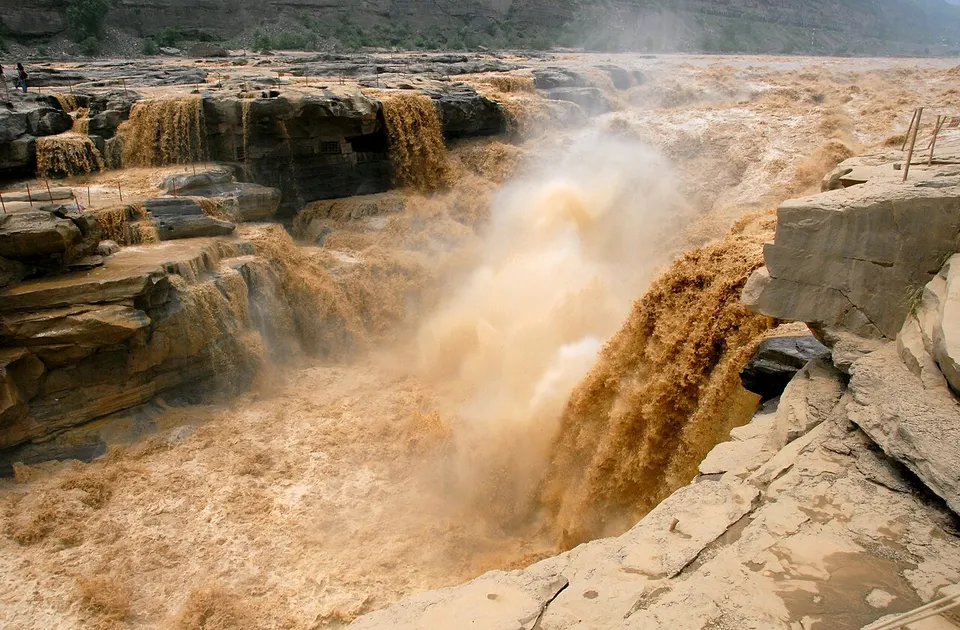
A roaring yellow waterfall, a looping river and the Yellow Emperor's tomb
- Type
- City
- Region
- Shaanxi
- Featured places
- 1
- Listed sites
- 263 rated 5A · 9 rated 4A · 18 national heritage
About Yan'an
Yan'an spreads over the loess plateau of northern Shaanxi, where thick wind-blown silt has worn into ridges and gullies and cave homes called yaodong are dug into the hillsides. It is best known as the headquarters of the Chinese Communist Party from 1937 to 1947. On its eastern edge the Yellow River plunges over the Hukou Waterfalls and swings through the great meander of Qiankun Bay, and in the south the Mausoleum of the Yellow Emperor stands among ancient cypresses at Huangling.
What to eat in Yan'an
- Zichang buckwheat jianbing (子长煎饼)
Featured places in Yan'an
-
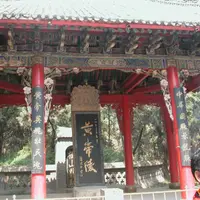
Mausoleum of the Yellow Emperor 黄帝陵
Ancient cypresses, an ancestral temple and the tomb mound of the legendary Yellow Emperor
Listed sites in Yan'an
26 sites in Yan'an are on the official lists. Those with a page of their own link to it; the rest open as cards on the map.
- Hukou Waterfalls (Shaanxi side) 壶口瀑布 5A scenic area
The largest waterfall on the Yellow River, where the river is squeezed from a bed several hundred metres wide into a narrow rock trough and plunges into it in a roar of brown water and spray; the 'teapot spout' (hukou) shape gives the falls their name. - Qiankun Bay 乾坤湾 5A scenic area
A great looping meander of the Yellow River in the Shanxi–Shaanxi canyon at Yanchuan, promoted as the 'first bend of the Yellow River' and part of the Yellow River Meanders national geopark. - Yan'an Revolutionary Sites 延安革命纪念地 5A scenic area · National heritage site
The compounds where the Chinese Communist Party Central Committee lived and worked while it was based in Yan'an from January 1937 to March 1947 are spread across the city: the cave dwellings, offices and assembly halls of Yangjialing, where the party's Seventh National Congress met in 1945, Zaoyuan (Date Garden), Wangjiaping, Fenghuang Hill and the former Northwest Bureau. - Bao'an Revolutionary Site 保安革命旧址 4A scenic area · National heritage site · on the map
Zhidan's county town, then called Bao'an, was the seat of the Communist Party Central Committee from July 1936 to January 1937, between its stays at Wayaobao and Yan'an, and the American journalist Edgar Snow visited the leaders here in 1936 for his book Red Star Over China. - Ganquan Canyon 甘泉大峡谷 4A scenic area · on the map
A group of narrow Danxia slot canyons in Ganquan County, also called the Yucha Canyon, made up of side gorges such as Huashugou, Longbagou and Yueyagu where curving red rock walls close in overhead. - Huangling National Forest Park 黄陵国家森林公园 4A scenic area · on the map
A national forest park of about 44 km² in the Qiaoshan forest on the upper Ju River, south-west of Huangling town, opened to visitors in 2015. - Huanglong Mountain Scenic Area 黄龙山 4A scenic area · on the map
A 13 km² forest scenic area in the wooded Huanglong Mountains on the south-western edge of Huanglong town, with its visitor centre at Dianzihe village. - Laoshan National Forest Park 劳山国家森林公园 4A scenic area · on the map
A national forest park in the Lao Shan hills of south-western Ganquan County, south of Yan'an, where secondary forest covers the loess hills; the provincial forestry bureau puts its forest cover at 92%. - Long March Victory Memorial Park, Wuqi 中央红军长征胜利纪念园 4A scenic area · on the map
A memorial park on Shengli ('Victory') Hill above Wuqi town, approved in 2005, marking the end of the Central Red Army's Long March, which reached Wuqi on 19 October 1935. - Nanniwan 南泥湾 4A scenic area · National heritage site · on the map
A valley about 45 km south-east of Yan'an where the Eighth Route Army's 359th Brigade was sent in 1941 to clear land and farm, as the Communist base area sought self-sufficiency under an economic blockade; the campaign is the subject of the 1943 song 'Nanniwan'. - Qiulin Anti-Japanese War Memorial Site 秋林抗战纪念地 4A scenic area · on the map
Qiulin, a small town in Yichuan County, was the headquarters of the Nationalist army's Second War Zone under Yan Xishan after the Japanese advance drove it out of Shanxi in 1938. - Zhongshan Grottoes 钟山石窟 4A scenic area · National heritage site · on the map
A Northern Song Buddhist cave temple at the foot of Zhong Shan west of Zichang, begun in 1067. - Baishan Temple Pagoda 柏山寺塔 National heritage site · on the map
An octagonal brick pagoda of the early Northern Song dynasty on Bai Shan at Zhiluo, locally called the Zhiluo Pagoda; it is all that remains of Baishan Temple. - Former Border Region High Court 陕甘宁边区高等法院旧址 National heritage site · on the map
The hillside compound on Longwan Shan, just south of Pagoda Hill, that was the seat of the High Court of the Shaanxi–Gansu–Ningxia Border Region, the Communist-led administration based in Yan'an, from 1941 until the court moved to Xi'an in 1949, apart from a year away during the fighting of 1947–48. - Fuyan Temple Pagoda 福严院塔 National heritage site · on the map
A Song-dynasty brick pagoda at Dongcun village in Fu County, locally called the Dongcun Pagoda and the only survivor of Fuyan Temple. - Kaiyuan Temple Pagoda, Fu County 开元寺塔 National heritage site · on the map
A square Tang-dynasty brick pagoda, built in 740–741, standing halfway up the west hill above Fu County town, where it is known as the Xishan Pagoda; the temple around it has long gone. - Luochuan Conference Site 洛川会议旧址 National heritage site · on the map
The village school at Fengjia, about 10 km north of Luochuan town, where the Communist Party Politburo held an enlarged meeting from 22 to 25 August 1937. - Qingliang Mountain and Wanfo Caves 清凉山万佛洞 National heritage site · on the map
Qingliang Mountain, in central Yan'an across the Yan River from Fenghuang Hill and Pagoda Hill, holds the Wanfo Caves, four Buddhist grottoes with carvings from the Song, Yuan and Ming dynasties, and a glazed-tile pagoda. - Shihong Temple Grottoes 石泓寺石窟 National heritage site · on the map
A Buddhist cave temple on the north bank of the Chuanzi River at Han village in Zhiluo town, west of Fu County town, also called the Chuanzihe Grottoes. - Tiebiancheng Ruins 铁边城遗址 National heritage site · on the map
The remains of a walled frontier town of the Northern Song period at Tiebiancheng in the far west of Wuqi County, listed as a national heritage site in 2013. - Wan'an Temple Grottoes 万安禅院石窟 National heritage site · on the map
A Northern Song Buddhist cave temple on a hillside at Yu village in Shuanglong town, west of Huangling, carved between 1095 and 1115. - Wanfeng Pagoda 万凤塔 National heritage site · on the map
A Song-dynasty brick pagoda, repaired in the Ming dynasty, standing on the site of the vanished Xingguo Temple at Fucheng village in Luochuan County. - Wayaobao Revolutionary Sites 瓦窑堡革命旧址 National heritage site · on the map
Wayaobao, now the centre of Zichang, was where the Communist Party Politburo held an enlarged meeting from 17 to 25 December 1935, chaired by Zhang Wentian, which set out the party's policy of an anti-Japanese national united front. - Wuqi Revolutionary Site 吴起革命旧址 National heritage site · on the map
The cave-dwelling compound in Wuqi town where the Communist Party leadership stayed after the Central Red Army arrived on 19 October 1935 at the end of the Long March; the Politburo met here on 22 October to set its next tasks. - Yanyi Oil Well 延一井 National heritage site · on the map
The oil well completed in 1907 by the Yanchang Oil Factory, which the Qing government had authorised in 1905, known in China as the country's first onshore oil well; the factory also built China's first refinery here. - Zhang Side Memorial Site 张思德牺牲纪念地 National heritage site · on the map
The place in Ansai where Zhang Side, a soldier of the Communist Party's central guard regiment, was killed on 5 September 1944 when a charcoal kiln he was digging collapsed.
On the map
Open Yan'an on the illustrated map to see its outline, its places and listed sites together, and to add them to a trip.
Open Yan'an on the map