 Atlas of China
Haidong 海东Hǎidōng
Painted pottery, 4,000-year-old noodles and the Tu and Salar homelands
About Haidong
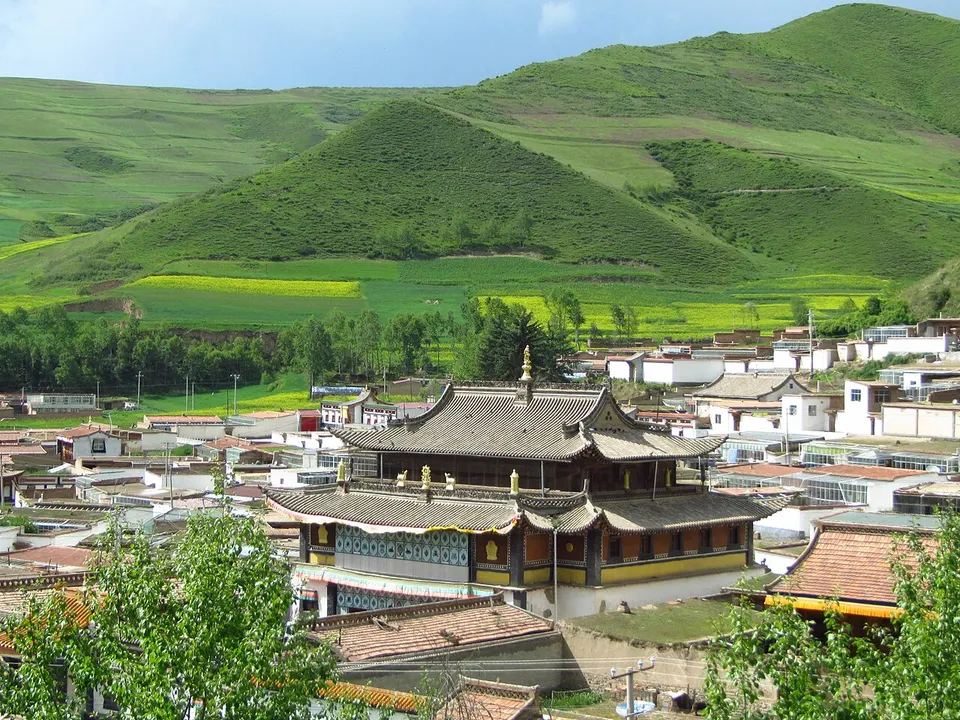
Haidong, 'east of the lake', fills the low, comparatively warm valleys of the Huangshui and Yellow rivers, where Han, Hui, Tu, Salar and Tibetan villages sit close together. The Lajia Archaeological Site, a settlement buried by a natural disaster some 4,000 years ago, yielded noodles described in 2005 as the world's oldest known, and Ming-era Qutan Temple, begun in 1392, is a palace-like complex with painted corridors. Huzhu is Tu country, known for highland-barley liquor, and Xunhua is China's only Salar autonomous county.
What to eat in Haidong
- Qinghai lamian (青海拉面)
- Huzhu highland-barley liquor (互助青稞酒)
Listed sites in Haidong
20 sites in Haidong are on the official lists. Those with a page of their own link to it; the rest open as cards on the map.
- Tu Native Land Park, Huzhu 互助土族故土园 5A scenic area · on the map
A folk-culture complex around Weiyuan, the county town of Huzhu Tu Autonomous County, presenting Tu (Monguor) culture through traditional-style courtyard houses, an old oil mill, liquor workshops and a chieftain's mansion, with live song, dance and wedding performances. - Beishan National Forest Park, Huzhu 互助北山国家森林公园 4A scenic area · on the map
A large forest park in the mountains north-east of Huzhu, rising from about 2,100 m to over 4,300 m and also a national geopark. - Hehuang Culture Museum 河湟文化博物馆 4A scenic area · on the map
A regional museum in Ledu District that opened in July 2023 and is described in Chinese state media as the only comprehensive museum devoted to Hehuang culture, the cultures of the Huangshui valley in eastern Qinghai. - Lajia Archaeological Site 喇家遗址 4A scenic area · National heritage site
Lajia is a Qijia-culture settlement about 4,000 years old on a Yellow River terrace, where excavations found houses destroyed in a sudden disaster, with victims' remains still inside. - Ping'an Yi (Hehuang Folk Culture Quarter) 平安驿 4A scenic area · on the map
A newly built cultural quarter in Ping'an District, laid out in the style of an old post-station village and themed on Hehuang, the Huangshui valley of eastern Qinghai, whose food, architecture and crafts reflect its many ethnic groups. - Qili Flower Sea 七里花海 4A scenic area · on the map
A rural-tourism park at the foot of Mount Kangeda in Shanzhuang village, Gushan town, Minhe County, developed from 2017 on stony wasteland. - Salar Homeland Folk Culture Park 撒拉尔故里民俗文化园 4A scenic area · on the map
A folk-culture park in Majia village, Jiezi town, set up to present the life of the Salar, a Muslim people whose ancestors, by tradition, migrated here from Central Asia and who live mainly in Xunhua. - Ahetan Mosque 阿河滩清真寺 National heritage site · on the map
A Qing-period mosque in the Salar village of Ahetan in Ganduo town, Hualong, listed nationally in 2013 after provincial protection from 1988. - Chuzang Monastery 却藏寺 National heritage site
A Gelug monastery in the hills north of Huzhu, founded in 1649 and one of four well-known monasteries of north-eastern Qinghai. - Dandou Monastery 旦斗寺 National heritage site · on the map
A Tibetan Buddhist monastery in Jinyuan Tibetan township, Hualong, regarded as one of the main cradles of the later diffusion of Buddhism on the Tibetan plateau. - Gönlung Monastery (Youning Temple) 佑宁寺 National heritage site · on the map
A Gelug monastery in the hills east of Huzhu, founded in 1604 and long called the mother of the monasteries north of the Huangshui river. - Hongshuiquan Mosque 洪水泉清真寺 National heritage site · on the map
A mosque in Hongshuiquan village, Ping'an District, listed nationally in 2013 as a Ming-to-Qing building. - Jiezi Gongbei 街子拱北 National heritage site · on the map
A Muslim tomb shrine (gongbei) in Jiezi town, Xunhua, listed nationally in 2013 as a Qing-period tomb. - Liuwan Cemetery and Painted Pottery Museum 柳湾遗址 National heritage site · on the map
Liuwan is a Neolithic to Bronze Age cemetery found in 1974, where about 1,700 graves of the Majiayao, Qijia and Xindian cultures, dating from roughly 4,600 to 3,600 years ago, were excavated. - Qutan Temple 瞿昙寺 National heritage site
A Gelug-school Tibetan Buddhist monastery in a side valley south of Ledu, begun in 1392 in the early Ming dynasty and laid out like a small palace with a gatehouse, three courtyards and a long axis of halls, and nicknamed the 'little Forbidden City' in tourism material. - Salar Mosques of Xunhua 撒拉族清真寺古建筑群 National heritage site · on the map
A national heritage group of five Qing-period mosques of the Salar community in Xunhua County, at Mengda, Qingshui (Hedong), Tashapo, Zhang'ga and Kewa, listed together in 2013. - Tianyoude Liquor Workshop 天佑德酒作坊 National heritage site · on the map
The historic workshop of the Tianyoude brand of highland-barley (qingke) liquor in Weiyuan, listed nationally in 2013 as a Qing-period industrial site. - Wendu Monastery and the 10th Panchen Lama's Birthplace 文都寺及班禅大师故居 National heritage site · on the map
A Gelug monastery, also written Bimdo or Biandu, in Wendu Tibetan township, Xunhua, together with the house where the 10th Panchen Lama was born in 1938. - Western Route Red Army Sites, Xunhua 循化西路红军革命旧址 National heritage site · on the map
According to official accounts, over 400 captured soldiers of the Red Army's Western Route Army were held in Hongguang village, then called Zanbuhu, by Ma Bufang's forces from 1939 to 1946 and set to forced labour clearing land and building houses, a school and a mosque. - Xiaqiong Monastery 夏琼寺 National heritage site · on the map
A Gelug monastery in remote hills in Chapu Tibetan township, Hualong, named for the roc-shaped mountain it stands on ('Xiaqiong' means roc in Tibetan).
On the map
Open Haidong on the illustrated map to see its outline, its places and listed sites together, and to add them to a trip.
Open Haidong on the map