 Atlas of China
Chifeng 赤峰Chìfēng
Khitan capitals, a Neolithic jade culture and a granite forest
- Type
- City
- Region
- Inner Mongolia
- Listed sites
- 321 rated 5A · 10 rated 4A · 23 national heritage
About Chifeng
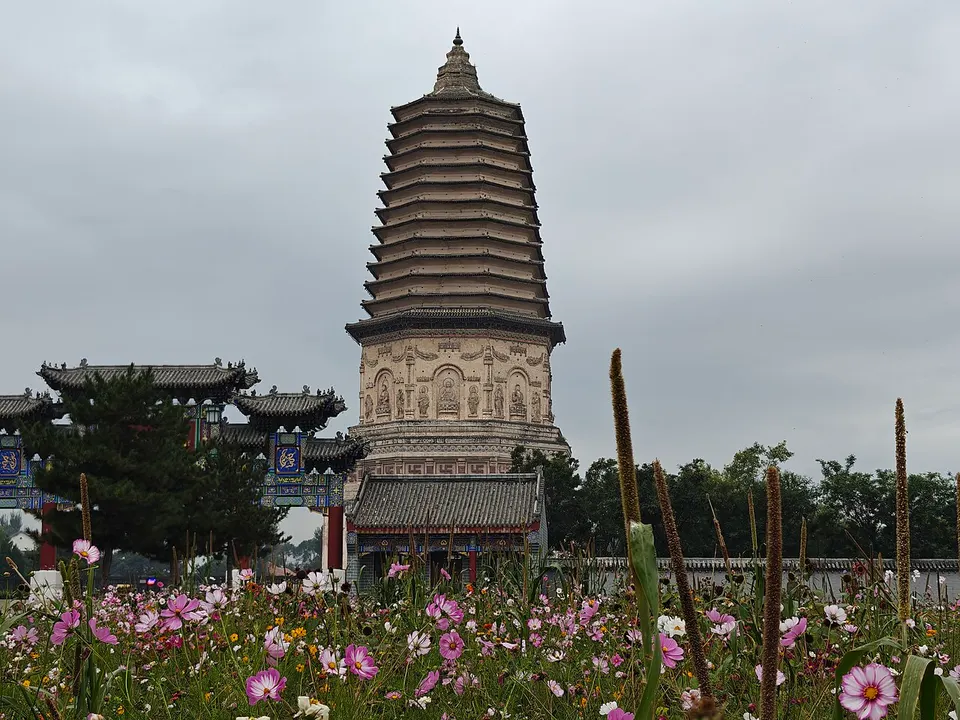
Chifeng, 'red peak', takes its name from the hill on its north-east edge that gave the Hongshan culture of about 4700 to 2900 BC its name. The Khitan-built Liao dynasty had its first capital at Shangjing, founded in 918, and its Middle Capital at Zhongjing, where the 13-storey Daming Pagoda still rises about 80 m. In the north-west, Hexigten Banner's geopark takes in the Arshihaty Granite Forest and the saline Dali Lake.
What to eat in Chifeng
- Chifeng duijia, a flaky flatbread filled with smoked meat (赤峰对夹)
- Deep-fried Dali Lake fish (干炸华子鱼)
Listed sites in Chifeng
32 sites in Chifeng are on the official lists. Those with a page of their own link to it; the rest open as cards on the map.
- Arshihaty Granite Forest 阿斯哈图石林 5A scenic area · on the map
A park area of the Hexigten Global Geopark in the north of Hexigten Banner, where granite columns and crags 5 to 30 metres high stand along a mountain ridge at about 1,700 metres above sea level. - Aohan Hot Spring Resort 敖汉温泉城 4A scenic area · on the map
A hot-spring health resort at Reshuitang village in the hills of south-west Aohan Banner, about 695 m above sea level beside planted pine woods. - Chifeng Museum 赤峰博物馆 4A scenic area · on the map
Chifeng's main history museum stands on the bank of the Xibo River in the city's new district; its present building opened in 2010, and it is now part of the Chifeng Museum Institute. - Daguangdingzi Wind Culture Resort 大光顶子 4A scenic area · on the map
A wind-themed leisure resort on high grassland in Hexigten Banner, set among wind turbines. - Dali Lake 达里湖 4A scenic area · on the map
A saline lake without an outlet on the Hexigten Banner steppe, dammed by lava flows, with the Hunshandak sand dunes on its southern side and a group of extinct volcanoes to the north-west. - Daoxugou Scenic Area 道须沟 4A scenic area · on the map
Daoxugou is a forested valley scenic area inside the Heilihe National Nature Reserve in the far west of Ningcheng County, covering about 1,180 hectares. - Ka La Qin Palace 喀喇沁亲王府 4A scenic area · National heritage site · on the map
The palace was the seat of the Harqin princes under the Qing dynasty, begun in 1679 and enlarged in 1783 to the standard of a prince's mansion. - Meilingu Ski Resort 美林谷滑雪场 4A scenic area · on the map
A ski resort in the mountains of Harqin Banner with eight runs, three for beginners and five for intermediate and advanced skiers, and a 194-room hotel. - Yulong Sand Lake 玉龙沙湖 4A scenic area · on the map
A lake among dunes at the western edge of the Horqin Sandy Land in Ongniud Banner, with grassland, wetland, rock outcrops and pine stands nearby. - Zhenji Temple Grottoes (Zhaomiao) 真寂之寺石窟(召庙) 4A scenic area · National heritage site · on the map
The Zhenji Temple grottoes are three Liao-dynasty caves cut into a cliff face in a valley in the hills south of Lindong, with a Qing-dynasty lamasery, Shanfu Temple, built against them; locally the place is called Zhaomiao. - Zimeng Lake 紫蒙湖 4A scenic area · on the map
A reservoir in the hills of Ningcheng County, known as Dahushi Reservoir until it was renamed Zimeng Lake in 2010, with a water surface of about 600 hectares. - Baoshan and Hansumu Tombs 宝山、罕苏木墓群 National heritage site · on the map
Baoshan is an early Liao cemetery of Khitan nobles on a gentle slope, enclosed by earth walls about 200 m long on the east and west sides, with gates and barbicans on the east and south, and the tombs lie in three rows in the middle and northern part. - Chaganhaote Ruins (White City) 查干浩特城址 National heritage site · on the map
Chaganhaote, or the White City, is the ruined capital that scholars identify with Ligdan Khan, the last Great Khan of the Mongols, and it is among the best-preserved earthen city sites in Inner Mongolia. - Chengzishan Site 城子山遗址 National heritage site · on the map
Chengzishan is a hilltop site of the Lower Xiajiadian culture, about 4,000 years old, whose central area on the summit covers about 150,000 square metres. - Chifeng North Great Mosque 赤峰清真北大寺 National heritage site
Founded in 1739 and rebuilt between 1742 and 1747, this is regarded as the largest and oldest mosque in the Chifeng area, and it was listed nationally in 2013. - Erdaojingzi Site and Museum 二道井子遗址 National heritage site · on the map
Erdaojingzi is a settlement of the Lower Xiajiadian culture, about 4,000 years old, found in 2009 during construction of the Chifeng–Chaoyang expressway and named one of China's top ten archaeological discoveries of that year. - Falun Temple 法轮寺 National heritage site · on the map
Falun Temple is a Tibetan Buddhist temple built in 1745 in a mixed Mongol and Han style, and served as the banner temple of the Harqin Mongol princes. - Fanzong Temple 梵宗寺 National heritage site · on the map
Fanzong Temple is a Gelug Tibetan Buddhist monastery that served as the banner temple of the Ongniud princes; it was moved to its present hillside site in 1743, and the Qianlong emperor gave it its name. - Fuhui Temple 福会寺 National heritage site · on the map
Fuhui Temple was the banner temple of Harqin and the family temple of the princes, built in the Kangxi period of the Qing dynasty. - Han Kuangsi Family Cemetery 韩匡嗣家族墓地 National heritage site · on the map
The cemetery of Han Kuangsi, a Liao-dynasty official, and his family lies on the south slope of Baiyinhan Mountain in Bairin Left Banner. - Heicheng Han City Site 黑城城址 National heritage site · on the map
Heicheng is the site of a walled city of the Han dynasty beside Heicheng village in Youbeiping town, identified in Chinese sources as Pinggang, the Western Han seat of Youbeiping commandery. - Hongshan Sites 红山遗址群 National heritage site · on the map
Hongshan, a reddish hill on the north-east edge of Chifeng that gave the city its name, is the type site of the Hongshan culture (about 4700 to 2900 BC), first recorded there in 1908 by the Japanese archaeologist Torii Ryūzō. - Huifu Temple 荟福寺 National heritage site · on the map
Huifu Temple is a Gelug Tibetan Buddhist temple in the middle of Daban, built in 1706 under Prince Urgun of the Bairin Right Banner and Princess Rongxian, a daughter of the Kangxi emperor. - Liao Imperial Tombs and Qingzhou White Pagoda 辽陵及奉陵邑 National heritage site · on the map
This national heritage listing covers the burial grounds of the Liao emperors and the towns that served them, spread across Bairin Left and Bairin Right Banners. - Liao Middle Capital (Zhongjing) Site 辽中京遗址 National heritage site · on the map
Zhongjing was the Middle Capital of the Liao dynasty, walled in 1007 and laid out in three nested enclosures on the model of the Northern Song capital Kaifeng. - Liao Shangjing Site 辽上京遗址 National heritage site
Shangjing, founded in 918, was the first capital of the Khitan-built Liao dynasty, and its ruins beside the Shali River form a national archaeological site park. - Lingyue Temple 灵悦寺 National heritage site · on the map
Lingyue Temple stands in the middle of Jinshan town and was built in the Kangxi reign as the family temple of the emperor's fifth daughter, Princess Heshuo Duanjing, and her husband. - Longquan Temple, Jinshan 锦山龙泉寺 National heritage site · on the map
Longquan Temple is a small hillside temple about 3 km north-west of Jinshan, built in three terraces below Lion Rock beside a spring that gives it its name, Dragon Spring. - Mushixia Wartime Fortifications Site 侵华日军木石匣工事旧址 National heritage site · on the map
Fortifications built by the Japanese army in 1941–43 survive beside the Mushixia river at Silibeng village in Tongxing town, at the eastern foot of the Huanggangliang range. - Wu'anzhou Site and White Pagoda 武安州遗址 National heritage site · on the map
A Liao-dynasty brick pagoda stands on a rise at the west edge of Baitazi village and is the standing monument of the Wu'anzhou site, a town of the Liao, Jin and Yuan periods that was listed nationally in 2013. - Yingchang 应昌路故城 National heritage site · on the map
Yingchang was a walled city built from 1270 for the Khongirad Mongols, who supplied empresses to the Yuan court, and its lords held the title Prince of Lu. - Zhang Yingrui Family Cemetery 张应瑞家族墓地 National heritage site · on the map
Zhang Yingrui was a Yuan-dynasty official who served the Khongirad princes, and his family cemetery lies at Guogongfu village in Wutonghua town.
On the map
Open Chifeng on the illustrated map to see its outline, its places and listed sites together, and to add them to a trip.
Open Chifeng on the map