 Atlas of China
Xinxiang 新乡Xīnxiāng
A road chiselled through the Taihang cliffs and the field where the Shang fell
About Xinxiang
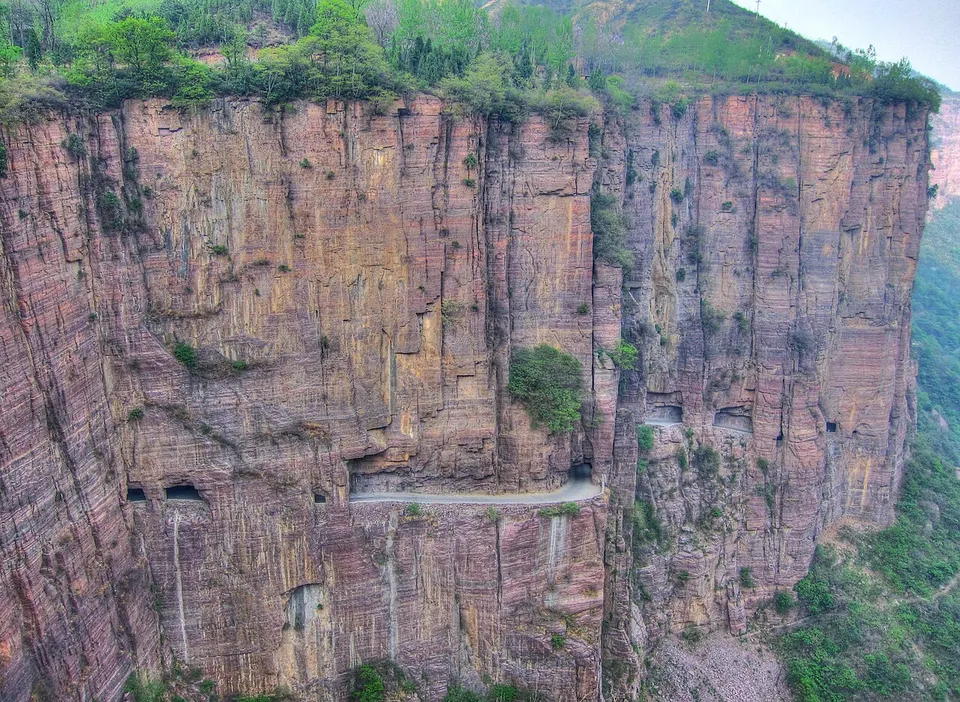
Xinxiang is an industrial city on the Beijing–Guangzhou railway, and the Battle of Muye, in which the Zhou overthrew the Shang around 1046 BC, is traditionally placed in what is now its Muye District. In Huixian, where the Taihang Mountains rise to the north-west, the cliff-walled valleys of Baoquan and Baligou are the best-known scenic areas, and at Guoliang villagers spent 1972 to 1977 chiselling a road tunnel through a cliff by hand. Weihui has a temple to Bigan, uncle of the last Shang king.
Featured places in Xinxiang
-
Wanxian Mountain (Guoliang) 万仙山
A village that hand-cut a road through the cliff face
Listed sites in Xinxiang
29 sites in Xinxiang are on the official lists. Those with a page of their own link to it; the rest open as cards on the map.
- Baligou Scenic Area 八里沟 5A scenic area · on the map
A canyon scenic area in the Taihang Mountains north-west of Huixian, rated 5A in 2019, where three tiers of red cliffs enclose deep valleys with a string of pools and waterfalls, among them the Tianhe (Heavenly River) Waterfall. - Baoquan Scenic Area 宝泉 5A scenic area · on the map
A mountain scenic area under the red Taihang cliffs west of Huixian, rated 5A in December 2024. - Boyu Village Gentleman Culture Area, Changyuan 伯玉君子文化旅游区 4A scenic area · on the map
A rural tourism area in Boyu village on the edge of Changyuan, the home of Qu Boyu, a statesman of the Spring and Autumn state of Wey whom Confucius praised as a true gentleman. - Fenghu Lake Park 凤湖 4A scenic area · on the map
A large landscaped lake in the centre of the new Pingyuan district, across the Yellow River from Zhengzhou, built as a reservoir for Yellow River water and opened as a park that was rated 4A in 2019. - Guanshan Geopark 关山 4A scenic area · on the map
A national geopark in the Taihang Mountains north-west of Huixian, named after the ancient Zixia pass on a route through the range. - Jiaoding Mountain 轿顶山 4A scenic area · on the map
A mountain scenic area in the Taihang range north of Huixian, rated 4A in 2015, with red cliffs and forested slopes reached by a mountain road that visitors may drive up. - Jinghua Garden, Xinxiang 京华园 4A scenic area · on the map
A landscaped leisure park in Xiaoji town, Xinxiang County, run by a local company. - Jiuduo Rouduo Braised Meat Culture Park 九多肉多酱卤文化园 4A scenic area · on the map
A factory-tour attraction at the plant of Jiuduo Rouduo, a maker of soy-braised meats and side dishes in the industrial zone of Yuanyang County. - Longwoyan Forest Park 龙卧岩 4A scenic area · on the map
A provincial-level forest park in the Taihang foothills of northern Weihui, around Longwoyan village, which has turned to village tourism. - Mausoleum of the Prince of Lu 潞王陵 4A scenic area · National heritage site
The tombs of Zhu Yiliu, Prince Jian of Lu and a younger brother of the Wanli Emperor, and of his secondary consort Zhao, laid out side by side on the southern slope of Fenghuang Mountain on the model of the emperor's own Dingling tomb near Beijing. - Paomaling Geopark 跑马岭 4A scenic area · on the map
A provincial-level geopark and forest park in the Taihang foothills of northern Weihui, named after the ridge of the same name. - Temple and Tomb of Bi Gan 比干庙 4A scenic area · National heritage site
A temple and tomb complex for Bi Gan, the Shang-dynasty prince who was executed for rebuking the last Shang king, Di Xin, and was later worshipped as a god of wealth. - Wulongshan Tourist Area 五龙山 4A scenic area · on the map
A leisure and amusement complex in Changcun town just north-east of Huixian, with a children's amusement park, a ski slope in winter and staged shows, among them one on the Battle of Muye, in which the Zhou overthrew the Shang. - Baiquan Gardens, Huixian 百泉 National heritage site · on the map
A classical garden of Ming and Qing halls and pavilions around a spring-fed lake at the foot of Sumen Hill on the north-west edge of Huixian town; the springs now flow mainly after heavy rain and the lake is topped up from outside. - Baiyun Temple, Huixian 白云寺 National heritage site · on the map
A Buddhist temple founded in the Tang dynasty in the Baiyun Temple National Forest Park on the southern slopes of the Taihang Mountains; its main hall, with glazed dragon and lotus ridge decoration, is Ming, and most other buildings are Qing. - Daguan Stele, Xinxiang 新乡文庙大观圣作之碑 National heritage site · on the map
A stone stele of 1108 carrying Emperor Huizong's regulations for state schools, written out in his own slender 'thin gold' calligraphy under a six-character heading by the minister Cai Jing. - Dajue Temple and Wanshou Pagoda, Yanjin 大觉寺万寿塔 National heritage site · on the map
A temple in the north-west of Yanjin town whose seven-storey Ming pagoda, the Wanshou Pagoda, gives its name to the square in front. - Five Dynasties Dharani Pillar, Weihui 陀罗尼经幢 National heritage site · on the map
A stone dharani pillar of the Five Dynasties period engraved with Buddhist incantations, rising from a plain shaft through several carved tiers to a jewel-shaped finial. - Former Heshuo Library 河朔图书馆旧址 National heritage site · on the map
A library building completed in 1935 in central Xinxiang, in a Chinese palace style with a raised central bay under curved tiled roofs. - Gongcheng City Site 共城城址 National heritage site · on the map
The site of Gong, the Zhou-period city whose ruler Gong Bo He is traditionally said to have governed during the Gonghe Regency that began in 841 BC, the first precisely dated year in Chinese history. - Linglong Pagoda, Yuanyang 玲珑塔 National heritage site · on the map
A tall hexagonal brick pagoda of 1105, imitating a timber pavilion tower, outside the east gate of Yuanwu town; it belonged to Shanhu Temple, which burnt down in the Qing dynasty. - Pagoda of Guangtang Temple 广唐寺塔 National heritage site · on the map
A Song-period brick pagoda, the surviving structure of Guangtang Temple, standing in a village north of Yanjin town. - Shamen City Site 沙门城址 National heritage site · on the map
The sand-covered remains of a walled town and ferry crossing on an old course of the Yellow River, known locally as Wuqi City, with layers from the Warring States and Han periods beneath Song and Jin–Yuan remains. - Shanji Pagoda of Tianwang Temple 天王寺善济塔 National heritage site · on the map
A Yuan-dynasty brick pagoda, the surviving structure of the former Tianwang Temple in the town of Huixian. - Tang Dharani Pillar of Dingjue Temple 尊胜陀罗尼经幢 National heritage site · on the map
An octagonal Tang-dynasty stone pillar engraved with the Usnisa Vijaya Dharani sutra, which once stood at Dingjue Temple in Xinxiang and is described by the Weibin district government as one of only two surviving Tang dharani pillars in China. - Wangjing Tower, Weihui 望京楼 National heritage site
A two-storey hall of brick and stone built in 1591 by Zhu Yiliu, Prince of Lu and the only full brother of the Wanli Emperor, who raised it out of longing for his mother in Beijing; its name means 'gazing towards the capital'. - Xiangquan Temple Grottoes 香泉寺石窟 National heritage site · on the map
A mountain temple on Linluo Mountain whose cliff carvings date from the Northern Qi: a Thousand Buddha Cave with groups of Buddha and bodhisattva figures and, beside it, a carved passage of the Avatamsaka (Huayan) Sutra. - Ximing Temple Buddhist Stele 西明寺造像碑 National heritage site · on the map
A large Northern Wei Buddhist stele carved with a triad of the Buddha Amitayus between the bodhisattvas Avalokiteshvara and Mahasthamaprapta, set against a backscreen decorated with lotus petals, seated Buddhas, flying apsaras and flame patterns. - Yuanwu City God Temple 原武城隍庙 National heritage site
A small temple to the city god on East Street in the old town of Yuanwu, founded in 1369.
On the map
Open Xinxiang on the illustrated map to see its outline, its places and listed sites together, and to add them to a trip.
Open Xinxiang on the map