 Atlas of China
Pingliang 平凉Píngliáng
A Taoist mountain of cliff-top halls, and Northern Wei Buddhas by the Jing
About Pingliang
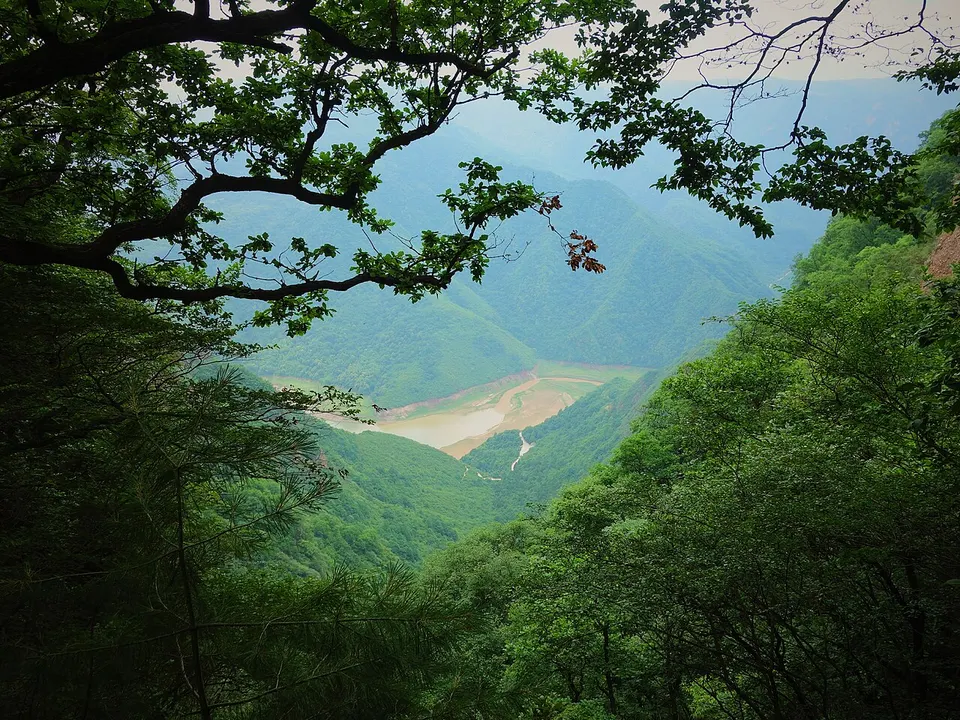
Pingliang, where the Liupan Mountains rise from the eastern loess, is known above all for Kongtong Shan, a sacred mountain of Taoism where legend says the Yellow Emperor asked the immortal Guangchengzi about the Dao. Taoist, Buddhist and Confucian halls perch on its crags above the city. Down the Jing River at Jingchuan are two Northern Wei cave temples, the South Grotto Temple and the Wangmu Palace Grotto, and the forested Guanshan in the west hides the Yunya Temple caves.
What to eat in Pingliang
- Jingning roast chicken (静宁烧鸡)
- Jingning guokui flatbread (静宁锅盔)
Listed sites in Pingliang
18 sites in Pingliang are on the official lists. Those with a page of their own link to it; the rest open as cards on the map.
- Kongtong Mountains 崆峒山 5A scenic area · National heritage site
Kongtong Shan, a forested spur of the Liupan range just west of Pingliang, is one of the sacred mountains of Taoism: legend says the Yellow Emperor came here to ask the immortal Guangchengzi about the Dao, and it is also known as the cradle of the Kongtong school of martial arts. - Ancient Lingtai and Jingshan Forest Park 古灵台荆山森林公园 4A scenic area · on the map
A wooded hill park on Zhongtai Hill in the middle of Lingtai town, around the 'Ancient Lingtai', the terrace that legend says King Wen of Zhou raised for offerings to Heaven after his campaign against the state of Mixu. - Guanshan Lianhuatai Scenic Area 关山莲花台 4A scenic area · on the map
A forested mountain area in the Guanshan, the old Long Mountains on Huating's western border, rising to 2,748 m at Wutai Shan, with birch and pine forest over more than 90 per cent of the land, meadows, rock pinnacles, waterfalls and old Buddhist and Taoist temples. - Haizhaigou Scenic Area 海寨沟 4A scenic area · on the map
A rural valley at Dazhai, south-east of Pingliang, developed as an activity resort. - Huangfu Mi Culture Park 皇甫谧文化园 4A scenic area
A traditional-medicine themed scenic area at Zhang'aopo village, the home district of Huangfu Mi (c. - Jieshipu Long March Memorial and Mao Zedong's Former Residence 界石铺红军长征毛泽东旧居纪念馆 4A scenic area · on the map
A memorial in Jieshipu town marking the Red Army's passage on the Long March: in October 1935 Mao Zedong and other leaders camped here with the Shaanxi–Gansu column, and in October 1936 Red Army units again passed through while the three main forces gathered in the Huining–Jingning area. - Longquan Temple, Chongxin 龙泉寺 4A scenic area · on the map
A wooded valley just north of Chongxin town, a provincial scenic area and geopark named after the temple at its heart, where the Guanzhu Spring feeds a waterfall and an ancient cypress coils along the cliff, a scene called the 'coiling dragon cypress'. - Mijiagou Scenic Area 米家沟 4A scenic area · on the map
A wooded valley and provincial forest park on the edge of Huating, run as a family leisure area with streams, peach and flower fields, a climbing wall, adventure courses, a children's playground and live-action combat games, plus cave-dwelling restaurants and yurts. - Tianjiagou Soil and Water Conservation Scenic Area 田家沟 4A scenic area · on the map
A loess gully system just north of Jingchuan that decades of soil-conservation work have turned green, now a national water-conservancy scenic area and soil-conservation demonstration park. - Wangmu Palace and Dayun Temple, Jingchuan 王母宫·大云寺 4A scenic area · National heritage site · on the map
Jingchuan's Queen Mother of the West culture area joins two sites in the town. - Yunya Temple Grottoes 云崖寺 4A scenic area · National heritage site · on the map
A forested gorge in the Guanshan mountains of Zhuanglang where red sandstone cliffs hold Buddhist caves begun in the late Northern Wei and restored up to the Qing: on the main cliff, about 300 m long and 80 m high, 19 caves in three tiers keep stone and clay statues and fragments of murals, with well-preserved Ming clay figures in Caves 6 and 7. - Chengji Ancient City Site 成纪故城遗址 National heritage site · on the map
Remains of Chengji, a county town founded under the Western Han on a terrace where the Nan and Lidian rivers meet; after an earthquake in 734 the county moved to present-day Qin'an, and a fort was rebuilt here in 1067. - Jingning Confucian Temple 静宁文庙 National heritage site · on the map
A Ming-dynasty state Confucian temple, rebuilt on its present site in the Jiajing reign, whose Lingxing Gate, semicircular pool, Dacheng Gate and seven-bay Dacheng Hall stand on a north–south axis, with the Minglun Hall of the old school to the west. - Niujiaogou Palaeolithic Site 牛角沟遗址 National heritage site · on the map
The gully at Baijia village in eastern Jingchuan where a human fossil about 50,000 years old, known as 'Jingchuan Man', was found in 1974, the first early human fossil from Gansu. - Shigong Temple Grottoes 石拱寺石窟 National heritage site · on the map
A small group of Buddhist cave shrines cut into a hillside near Shangguan in southern Huating, begun under the Northern Wei and carved on into the Sui; 14 caves and niches survive, known for their finely carved flying apsaras. - South Grotto Temple 南石窟寺 National heritage site · on the map
A Buddhist cave temple on the north bank of the Jing River, begun in 510 by Xi Kangsheng, prefect of Jingzhou, and often paired in local accounts with the North Grotto Temple near Qingyang as the 'twin pearls' of eastern Gansu's cave art. - Temple of the Prince of Wukang 武康王庙 National heritage site · on the map
A temple on Chongxin's East Street to Li Yuanliang, the Tang general and Prince of Wukang who built Chongxin's walls and garrisoned them against Tibetan Empire raids; it existed before 797 and was moved to this site in 1370. - Yan'en Temple Pagoda 延恩寺塔 National heritage site · on the map
A seven-storey octagonal brick pagoda some 33 m tall on Baota Ridge in eastern Pingliang, built between 1535 and 1546 and long called the Daming Pagoda after the stone plaque reading 'Da Ming' over its arched south door.
On the map
Open Pingliang on the illustrated map to see its outline, its places and listed sites together, and to add them to a trip.
Open Pingliang on the map