 Atlas of China
Huaqing Palace 华清宫Huáqīng Gōng
Hot springs at the foot of Mount Li where a Tang emperor wintered with Yang Guifei
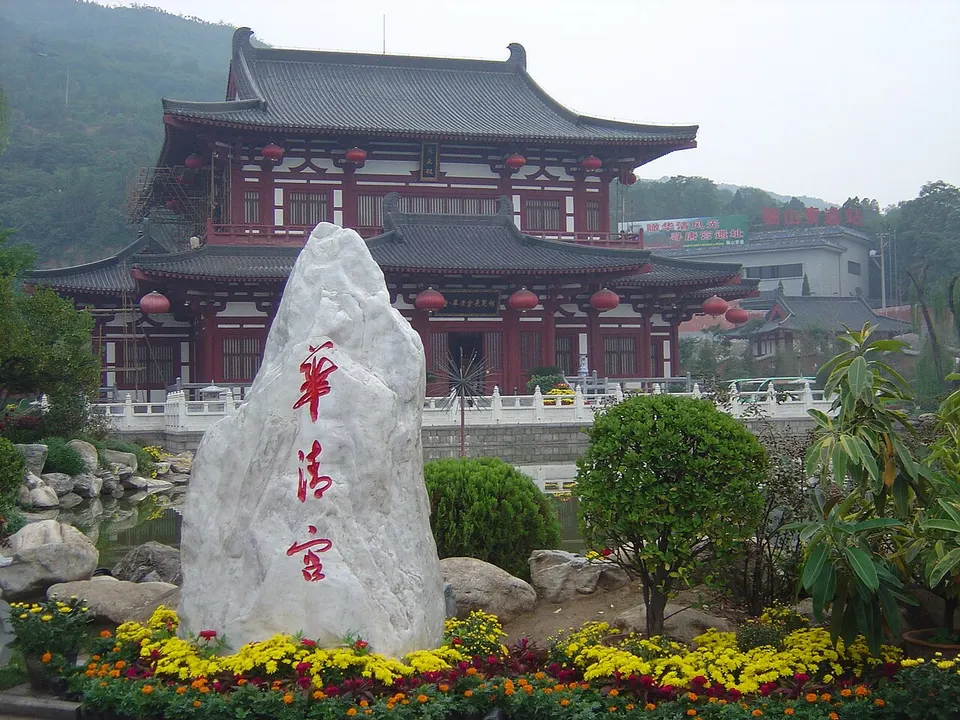
- Best time
- Apr–May, Sep–Oct
- Time needed
- Half a day
- Days to budget
- Half a day
- Stay in
- Xi'an
- Region
- Shaanxi
- Type
- Heritage
- Listed as
- 5A scenic area, National heritage site
Why go to Huaqing Palace
At the northern foot of Mount Li in Lintong, about 30 km east of central Xi'an, Huaqing Palace is a landscaped complex of hot springs, lakes and pavilions where rulers built bathing palaces from the Zhou dynasty onwards. The Tang palace decayed after the An Lushan rebellion and most of what stands today is much later; the real survivors are the excavated bathing pools of the Tang emperors and their consorts, shown in a site museum. In the evening the dance drama The Song of Everlasting Sorrow is staged beside the lake, with floodlit Mount Li as its backdrop.
The story
In 747 Emperor Xuanzong renamed the hot-spring palace Huaqing and enlarged it, and the court came here for the cold months with his favourite consort, Yang Guifei, until the An Lushan rebellion broke out in 755. Half a century later the poet Bai Juyi pictured her in The Song of Everlasting Sorrow, bathing in the warm water of the Huaqing springs on a chilly spring day.
What to see at Huaqing Palace
- Nine Dragon Lake 九龙湖: The landscaped lake at the heart of the park, with pavilions along its shore, below the slopes of Mount Li. The evening show uses its lakeside as a stage.
- Tang Imperial Bath Ruins Museum 唐御汤遗址博物馆: A museum built over the excavated bathing pools of the Tang court, on the north side of the park below Mount Li. It shows the stonework of the imperial baths at the level of the Tang ground.
- Lotus, Star and Begonia pools 莲花汤、星辰汤、海棠汤: Three of the excavated pools: the Lotus Pool was the emperor's own, the Star Pool another of the great Tang baths, and the Begonia Pool is the one tradition links with Yang Guifei. Sources disagree on which name belongs to which basin.
- Bingjian Pavilion 兵谏亭: A small pavilion on the western slope of Mount Li, named for the Xi'an Incident of December 1936, with views back over the park.
How to visit Huaqing Palace
The park has two main parts: the Nine Dragon Lake gardens and the bath-ruins museum, which sits against the foot of Mount Li. Walk the lake first, then the museum, and leave time and energy for the climb to Bingjian Pavilion on the slope behind. A half day covers it; add the evening show if you stay on.
How to get to Huaqing Palace
Take Metro Line 9 (change from Line 1 or 6 at Fangzhicheng) to Huaqingchi station, a few minutes' walk from the gate; tourist bus 306 from the east square of Xi'an Railway Station also stops here on its way to the Terracotta Army. A taxi from the Bell Tower takes about 45–60 minutes.
Where to stay
Most visitors base themselves in Xi'an and come out for a half day. Staying in Lintong, the town by the park, makes sense if you want the evening show and an early start at the Terracotta Army the next morning.
What to eat
- Lintong Huojing persimmons 临潼火晶柿子: A honey-sweet persimmon grown in Lintong, with a cultivation history that local sources put at about 1,300 years; found at stalls in the autumn.
- Lintong pomegranates 临潼石榴: Lintong is one of China's oldest pomegranate-growing areas, and its pomegranate-growing system was listed as important agricultural heritage in 2020; fresh fruit and juice are sold nearby in season.
Tips for visiting Huaqing Palace
- The Song of Everlasting Sorrow has been staged here since 2006 and runs in the evenings for much of the year, with a separate winter edition; it is outdoors and can be cancelled in bad weather, so book ahead and check the schedule.
- Pair it with the Terracotta Army, a short bus or taxi ride to the east, and stay on in Lintong for the evening show.
- The ticket also covers the wooded slopes of Mount Li behind the palace, where a small pavilion marks the spot where Chiang Kai-shek was captured during the Xi'an Incident of December 1936.
Nearby
- Terracotta Army 兵马俑 under 10 km
Thousands of life-size clay soldiers standing guard for China's first emperor - Daming Palace National Heritage Park 大明宫国家遗址公园 20 km
Earthen terraces and a rebuilt gatehouse marking out the lost palace of the Tang emperors - Han Yangling Mausoleum 汉阳陵 30 km
Walk on glass above burial pits full of armless clay figures at a Han emperor's tomb - Forest of Stone Steles Museum 西安碑林博物馆 30 km
Inscribed stone tablets of classics, calligraphy and Silk Road history by the south wall - Bell Tower and Drum Tower 钟楼·鼓楼 30 km
Two Ming towers at the heart of the walled city, where bell and drum once marked the day - Muslim Quarter 回民街 30 km
Halal street food and a temple-style mosque in the lanes north of the Drum Tower
Also within 30 km: Xi'an Expo Park 西安世博园 (10 km), Banpo Museum 半坡博物馆 (20 km), Bailucang 白鹿仓 (20 km), Chanba National Wetland Park 浐灞国家湿地公园 (20 km), Zhaohui Pagoda 昭慧塔 (20 km), Weinan Taohuayuan Folk Culture Park 渭南桃花源 (20 km).
On the map
Open Huaqing Palace on the illustrated map to see the terrain around it, what else is close, and to add it to a trip and plan the days.
Open Huaqing Palace on the map