 Atlas of China
Huangshi 黄石Huángshí
Copper mined since the Bronze Age and the furnaces of China's first steel giant
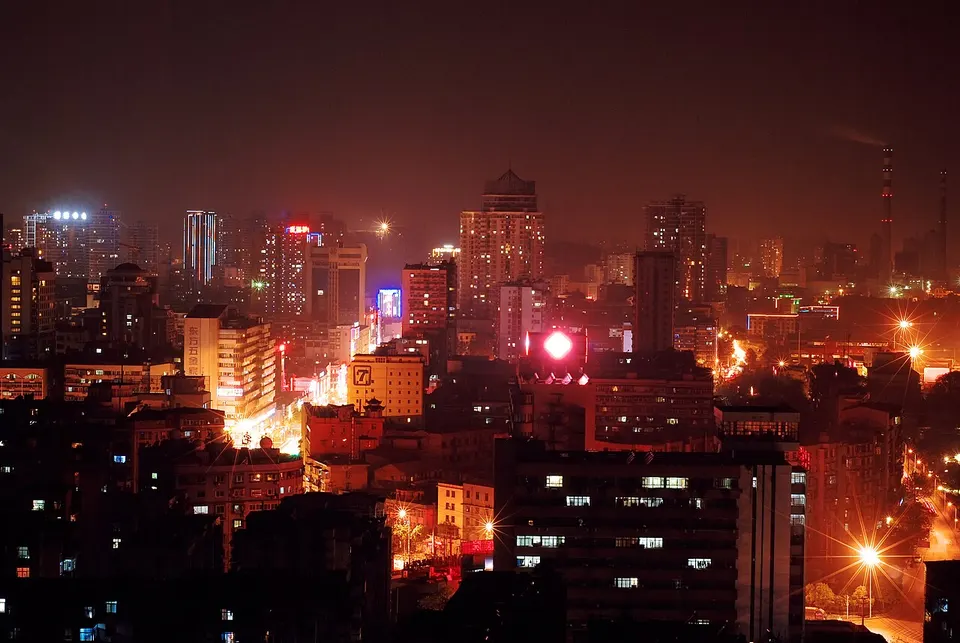
About Huangshi
Huangshi, a mining and industrial city on the south bank of the Yangtze, has dug its hills for metal for more than two thousand years. At Tonglüshan near Daye a museum stands over the shafts of an ancient copper mine, and the Daye iron mine is now a mine park around a vast terraced pit. Riverside remains of the Hanyeping company and the Huaxin cement works, founded in 1907, recall China's early heavy industry, while Xiandao Lake scatters wooded islands across the southern hills.
Listed sites in Huangshi
15 sites in Huangshi are on the official lists. Those with a page of their own link to it; the rest open as cards on the map.
- Dishuiya Waterfalls 滴水涯 4A scenic area · on the map
A valley scenic area in Paishi town built around a waterfall group that the county government calls the 'three falls and nine pools', the main fall dropping about 68 m. - Dongfang Mountain 东方山 4A scenic area · on the map
A forested hill of about 475 m with three main peaks, described as the largest forest park in Huangshi's urban area and named for the Han writer Dongfang Shuo, who by local tradition studied and practised Daoism here. - Huangshi National Mine Park 黄石国家矿山公园 4A scenic area · on the map
A mine park on the site of the Daye iron mine, where records of mining go back to the third century and which was mechanised in the late Qing. - Huangshi OCT Dinosaur Wonderland 黄石华侨城恐龙奇域 4A scenic area · on the map
A dinosaur-themed holiday resort on the shore of Daye Lake, opened in 2024. - Leishan Scenic Area, Daye 雷山风景区 4A scenic area · on the map
A hill scenic area in Chengui town, about 15 km west of Daye, covering some 55 km² in three zones: Xiaoleishan, with pines and oddly shaped rocks, Daquangou, a stream gorge with cascades and a reservoir, and Tiantaishan. - Longfeng Mountain Eco-Park, Daye 龙凤山 4A scenic area · on the map
A rural-tourism park of nearly 14,000 mu around the twin peaks of Qinglong and Yufeng at Shuanggangkou in Liurenba town, run by one company as a farming-and-tourism enterprise. - Shangfeng Ancient Village 上冯古村 4A scenic area · on the map
A hillside village in Jinhu subdistrict, Daye, nicknamed the village of the 'nine ancients' for its surviving old houses, paths, trees, wells and ancestral halls; local accounts date it to the late Yuan dynasty, some 600 years ago. - Tonglüshan Ancient Copper Mine 铜绿山古铜矿遗址 4A scenic area · National heritage site
An ancient copper-mining and smelting site that was worked from at least the Spring and Autumn period, and probably earlier, until the Han dynasty. - Xiandao Lake 仙岛湖 4A scenic area · on the map
A reservoir lake in the northern foothills of the Mufu Mountains, once marketed as Qiandao ('Thousand Island') Lake, with about 1,002 wooded islands scattered across roughly 30 km² of water. - Zhaoshan Ancient Village and Peach Country 沼山古村桃乡 4A scenic area · on the map
A rural-tourism area built around Zhaoshan village in Bao'an town, known for its 'gouxue' (blood) peach, with nearly 3,500 mu (about 230 ha) of groves in the village itself that blossom in spring and fruit in summer. - Hanyeping Iron and Coal Works Site 汉冶萍煤铁厂矿旧址 National heritage site · on the map
Surviving remains of the Hanyeping Coal and Iron Company, formed in 1908 when the Hanyang ironworks founded by the Qing official Zhang Zhidong was combined with the Daye iron mine and the Pingxiang coal mine; Chinese state media call it Asia's earliest combined iron, steel and coal enterprise. - Huaxin Cement Works (Huaxin 1907) 华新水泥厂旧址 National heritage site
A cement works founded in 1907 and shut down in 2007, which supplied cement for national projects such as the Great Hall of the People and the Wuhan Yangtze Bridge; its brick halls, conveyor galleries, slag store and wet-process rotary kilns, including two large kilns imported from the United States, have been preserved. - Longgang Revolutionary Sites 龙港革命旧址 National heritage site · on the map
A cluster of former Communist offices and residences in Longgang, an old market town on the Hubei–Jiangxi border that served in the late 1920s and early 1930s as a base for the party's east Hubei committee and Soviet government, and was nicknamed 'Little Moscow'. - Red Third Army Group Revolutionary Site 红三军团革命旧址 National heritage site · on the map
A former landowner's house in Liurenba village, a brick-and-timber complex of two-storey buildings (about 2,400 m²) with a classical Western-style façade, where in June 1930 an enlarged military committee meeting decided to form the Red Third Army Group from the Red Fifth and Eighth Armies. - Site of the Daye Soldiers Revolt 大冶兵暴旧址 National heritage site
The former Wubei military academy, begun in 1827 and later a school, where on 14 December 1929 a platoon leader named Cheng Zihua, a Communist Party member serving in the Nationalist army, led an armed uprising with Red Army support that is known as the Daye Soldiers' Revolt.
On the map
Open Huangshi on the illustrated map to see its outline, its places and listed sites together, and to add them to a trip.
Open Huangshi on the map