 Atlas of China
Jiaozuo 焦作Jiāozuò
Tai chi's home village, red-rock gorges and an old coal town turned resort
About Jiaozuo
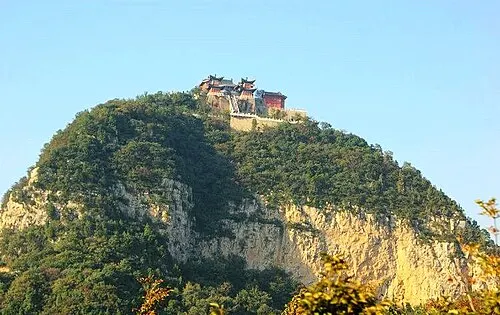
Jiaozuo lies between the Taihang Mountains and the Yellow River. The British Pekin Syndicate began large-scale coal mining in the early 20th century, and as the coal ran out the city turned to tourism: above all Yuntai Mountain, a UNESCO Global Geopark of gorges and waterfalls, along with Shennong Mountain and the Qingtian River. Chenjiagou in Wen County is recognised as the birthplace of tai chi, and Jiaying Temple in Wuzhi was built in 1723 for the Dragon Kings of the Yellow and Huai rivers.
Listed sites in Jiaozuo
34 sites in Jiaozuo are on the official lists. Those with a page of their own link to it; the rest open as cards on the map.
- Yuntai Mountain 云台山 5A scenic area
A 190 km² scenic area of red-rock gorges, sheer cliff walls, waterfalls and pools in the southern Taihang Mountains, part of the Yuntai Mountain UNESCO Global Geopark, rising to 1,308 m at Zhuyu Peak. - Chenjiagou 陈家沟 4A scenic area · on the map
The village in Wen County where Chen Wangting created taijiquan in the late Ming, recognised by China's national martial-arts authorities in 2007 as the birthplace of the art, which UNESCO inscribed as intangible heritage in 2020. - Dasha River Ecological Park 大沙河生态公园 4A scenic area · on the map
A long riverside park along the Dasha River as it runs through urban Jiaozuo, with a wide water surface that draws egrets and other wild birds, waterside paths and lawns. - Jiaozuo Film and Television City 焦作影视城 4A scenic area
A film studio and theme park built from 1995 by the Jiaozuo government and China Central Television, with about 2.5 km² of sets in the style of Spring and Autumn, Warring States, Qin, Han and Three Kingdoms architecture. - Jiaozuo Forest Zoo 焦作市森林动物园 4A scenic area · on the map
A zoo laid out in woodland in Jiefang district, Jiaozuo, with more than 100 species, including Siberian tigers, red pandas and meerkats. - Jiaying Temple (Jiayingguan) 嘉应观 4A scenic area · National heritage site
A temple complex founded in 1723 on the orders of the Yongzheng Emperor as the temple of the dragon kings of the Huai, Yellow and other rivers, close to the north bank of the Yellow River. - Laojia Mogou Village 老家莫沟 4A scenic area · on the map
Mogou, a village in Xiguo town ringed by gullies on three sides, which since 2015 has been renovated in place for rural tourism under the name 'Laojia Mogou' ('Old Home Mogou'). - Mixue Daka International Tea-Drink Dream Factory 蜜雪集团·大咖国际茶饮梦工厂 4A scenic area · on the map
An industrial-tourism site at the central factory of Daka International, which supplies the Mixue Bingcheng chain of freshly made drinks, in Wen County. - South–North Water Diversion Tianhe Park 南水北调天河公园 4A scenic area · on the map
A park running for about 10 km along both banks of the South–North Water Diversion central-route canal where it crosses urban Jiaozuo. - Xidajing 1919 Cultural Tourism Park 西大井1919 4A scenic area · on the map
A culture and leisure park on the site of the Wangfeng coal mine, known locally as Xidajing ('West Big Shaft'), which the British-owned Pekin Syndicate began building in 1919. - Yuanrong Temple 圆融寺 4A scenic area · on the map
An active Buddhist temple in the foothills of the Taihang Mountains at Dangyangyu village, Xiuwu County, just north of Jiaozuo. - Ancient City of the Yu State 邘国故城 National heritage site · on the map
The site of Yu, a walled town of the Western Zhou state granted to a son of King Wu, later a Han marquisate, south-east of Yutai village north of Qinyang. - Arabic Stele at Shuinanguan Mosque 水南关清真寺阿文碑 National heritage site · on the map
A bluestone stele of the Yuan dynasty or earlier, 1.8 m tall, carved with the Islamic declaration of faith in archaic Arabic script inside a circle, with lotus and peony borders on the back; it was found more than 3 m underground when the Shuinanguan Mosque in Qinyang was rebuilt. - Baijiayan Temple Pagoda 百家岩寺塔 National heritage site · on the map
A brick pagoda of the Jin dynasty (1115–1234) that belonged to the Baijiayan temple, at Baijiayan in the Yuntai Mountain area. - Beida Mosque 沁阳北大寺 National heritage site
One of the largest and best-preserved historic mosque complexes in Henan, rebuilt in 1580 and enlarged under the Qing in Chinese palace style, facing east in three courtyards. - Cisheng Temple 慈胜寺 National heritage site · on the map
A Buddhist temple at Dawu village in the west of Wen County, first founded in the Tang, destroyed in the wars at the end of the Northern Song and rebuilt under the Yuan, from which most of its surviving buildings date. - Dangyangyu Kiln Site 当阳峪窑址 National heritage site
The site of a large Song-period folk kiln at the southern edge of Dangyangyu village, known for its varied wares, especially white-slipped carved stoneware and marbled 'jiaotai' porcelain; examples are in the Palace Museum in Beijing. - Fucheng Shang City Site 府城遗址 National heritage site · on the map
An early Shang walled town of about 3,600 years ago, a square of roughly 300 m a side on a terrace at Fucheng village on the western side of Jiaozuo. - Miaole Temple Pagoda 妙乐寺塔 National heritage site · on the map
A 13-storey square brick pagoda of the dense-eave type, 34 m tall and hollow inside, first built in the Tang and rebuilt in 955 under the Later Zhou. - Qinglong Palace 青龙宫 National heritage site
A temple to the Azure Dragon rain god at Wanhuazhuang village on the north-western edge of Wuzhi county town, founded in the Ming and rebuilt by imperial order in 1813. - Qingtianhe Cliff Carvings 青天河摩崖 National heritage site · on the map
Buddhist carvings on the riverside cliffs of the Dan River north of Bo'ai, in two groups. - Sansheng Pagoda of Tianning Temple 天宁寺三圣塔 National heritage site · on the map
A 13-storey brick pagoda 32.76 m tall, built in 1171 under the Jin dynasty for the Tianning Temple, whose dense eaves taper in a smooth parabolic outline. - Shanling Mausoleum of Emperor Xian of Han 汉献帝禅陵 National heritage site
The tomb of Liu Xie, Emperor Xian, the last emperor of the Han dynasty, who abdicated in favour of Cao Pi in 220 and died in 234 as Duke of Shanyang; his empress Cao Jie, a daughter of Cao Cao, was buried with him in 260. - Shanyang Ancient City Site 山阳故城 National heritage site
The site of Shanyang, a walled town from the Eastern Zhou to the Northern Qi whose county became the fief of the deposed Emperor Xian of Han in 220. - Shengguo Temple Pagoda 胜果寺塔 National heritage site
A nine-storey octagonal brick pagoda about 27 m tall in Xiuwu county town, first built in the Tang and rebuilt in 1097 under the Northern Song. - Taiping Temple Grottoes, Zhaijian Valley 窄涧谷太平寺石窟 National heritage site · on the map
Buddhist caves and niches cut along about 160 m of limestone cliff in Zhaijian Valley, west of the main peak of Shennong Mountain, begun in the Northern Wei and added to until the Qing, though mostly Sui and Tang. - Thousand Buddha Pavilion, Wuzhi 千佛阁 National heritage site · on the map
A temple group at the north end of South Street in Wuzhi county town, founded in 1557 under the Ming and repaired in 1856, of which the gate hall, the middle Buddha hall and the pavilion itself survive. - Tomb of Han Yu 韩愈墓 National heritage site
The tomb of Han Yu (768–824), the Tang essayist, poet and Confucian thinker counted first of the Eight Great Prose Masters of the Tang and Song, on a hillside at Hanzhuang village west of Mengzhou. - Tomb of Zhu Zaiyu 朱载堉墓 National heritage site · on the map
The tomb of Zhu Zaiyu (1536–1611), the Ming prince, mathematician and music theorist who in 1584 set out twelve-tone equal temperament by precise calculation, below Jiufeng Mountain north-east of Qinyang. - Xianshengwang Temple 显圣王庙 National heritage site · on the map
A village temple on the southern edge of Mengzhou whose three-bay main hall dates from the Yuan dynasty, with Qing-dynasty dance and opera stages in front. - Xiguan Mosque, Bo'ai 西关清真寺 National heritage site · on the map
A mosque in Chinese palace style in the western quarter of Bo'ai county town, enlarged in 1405, whose surviving buildings date from the Qing. - Yaowang Temple, Jiaozuo 药王庙 National heritage site · on the map
A temple to Sun Simiao, the Tang physician revered as the King of Medicine, at Liguizuo village on the north-eastern edge of Jiaozuo; inscriptions record its founding in the early 12th century, and its main hall dates from the Yuan dynasty. - Yuxian Temple, Wen County 遇仙观 National heritage site · on the map
A Taoist temple of two courtyards below the Qin River dyke at Xubu village, about 12 km from Wen county town, founded under the Yuan as a river-god shrine and rebuilt in the Ming and Qing. - Zhaibuchang Village 寨卜昌村 National heritage site · on the map
A fortified village of Ming and Qing courtyard houses, most built in the 18th and 19th centuries, with the Wang clan ancestral hall, about 2 km of the village wall of 1868, a moat and three stone bridges.
On the map
Open Jiaozuo on the illustrated map to see its outline, its places and listed sites together, and to add them to a trip.
Open Jiaozuo on the map