 Atlas of China
Xichang & Qionghai Lake 西昌与邛海Xīchāng yǔ Qiónghǎi
A sunny lakeside city at the heart of Yi country, ablaze with torches each summer
- Best time
- Nov–Apr (dry and sunny); late Jul–early Aug for the Torch Festival
- Time needed
- 1–2 days
- Days to budget
- 1½ days
- Stay in
- Xichang
- Region
- Sichuan
- Type
- Culture
- Listed as
- 4A scenic area
Why go to Xichang & Qionghai Lake
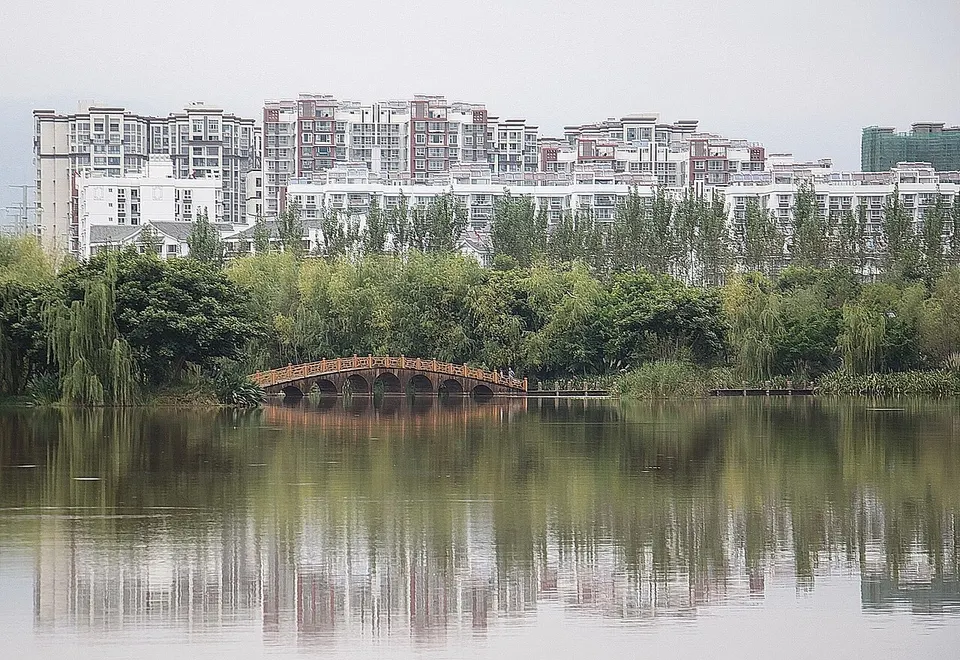
Xichang, capital of the Liangshan Yi Autonomous Prefecture, sits at about 1,500 metres beside Qionghai, Sichuan's second-largest freshwater lake. Mild, sunny winters earn it the nicknames 'Little Spring City' and 'Moon City'; walking and cycling paths run through the lakeside wetlands, and forested Lushan above the western shore is dotted with old Buddhist and Taoist temples. It is also the main town of the Yi people, whose Torch Festival is the region's biggest celebration.
The story
The Torch Festival falls around the 24th day of the sixth lunar month: families carry blazing torches around their homes and fields, there is wrestling, horse racing and bullfighting, and Xichang throws a night of mass torchlit revelry. One legend credits a strongman who drove off a plague of locusts with pine torches.
What to see at Xichang & Qionghai Lake
- Qionghai Lake 邛海: An L-shaped freshwater lake of about 27 square kilometres and 11 metres average depth, only 7 km from the centre of Xichang. Lakeshore wetlands and paths make it an easy walk or ride.
- Lushan 泸山: A 2,317-metre hill about 5 km south of the centre on the lake's western shore, where Confucian, Buddhist and Taoist shrines stand on one mountain. It is known locally for 'three wonders' and gives wide views over the lake.
- Guangfu Temple earthquake steles 光福寺地震碑林: The temple on Lushan keeps 108 tablets recording earthquakes from past centuries, one of China's notable stele collections and a key source for the region's earthquake history.
- Mengduan Shrine cypress 蒙段祠古柏: A very old cypress at the shrine on Lushan, with a trunk 8.5 metres round, is identified as having been planted in the Han dynasty.
How to visit Xichang & Qionghai Lake
Lushan and Qionghai sit side by side on the city's southern edge, so they combine easily: climb or ride up Lushan for the temples and the lake view, then walk the lakeshore. Half a day covers one temple and a lake stroll; a full day adds Lushan's other shrines and a longer lakeside walk.
How to get to Xichang & Qionghai Lake
Trains on the rebuilt Chengdu–Kunming line reach Xichang West from Chengdu in about 3–3.5 hours, and there are flights to Xichang Qingshan Airport. The lakeshore is around 15 km from the station by taxi.
Where to stay
Stay in Xichang city, on the lake's north-western shore, for transport, food and the Yi cultural sights; the Qionghai lakeside is a quieter alternative for water views and the walking paths.
What to eat
- Tuotuo pork 坨坨肉: A dish of the Yi people: big chunks of tender young pork seasoned with local herbs, traditionally served to guests.
- Buckwheat pancake 荞麦饼: A thick pancake of buckwheat, the staple grain of the Liangshan highlands, served alongside tuotuo pork.
Tips for visiting Xichang & Qionghai Lake
- The Torch Festival date follows the lunar calendar, usually landing in late July or early August; trains and hotels fill fast, so book well ahead.
- Ride or climb up Lushan to Guangfu Temple, which keeps a rare collection of stone tablets recording centuries of local earthquakes.
- Xichang is the usual Sichuan-side gateway to Lugu Lake, roughly five hours away by road via Yanyuan.
Nearby
Also within 30 km: Jianchang Old Town, Xichang 建昌古城 (under 10 km), Boshiwahei Rock Carvings 博什瓦黑岩画 (20 km), Luoji Mountain 螺髻山 (30 km).
On the map
Open Xichang & Qionghai Lake on the illustrated map to see the terrain around it, what else is close, and to add it to a trip and plan the days.
Open Xichang & Qionghai Lake on the map