 Atlas of China
Datong Ancient City 大同古城Dàtóng Gǔchéng
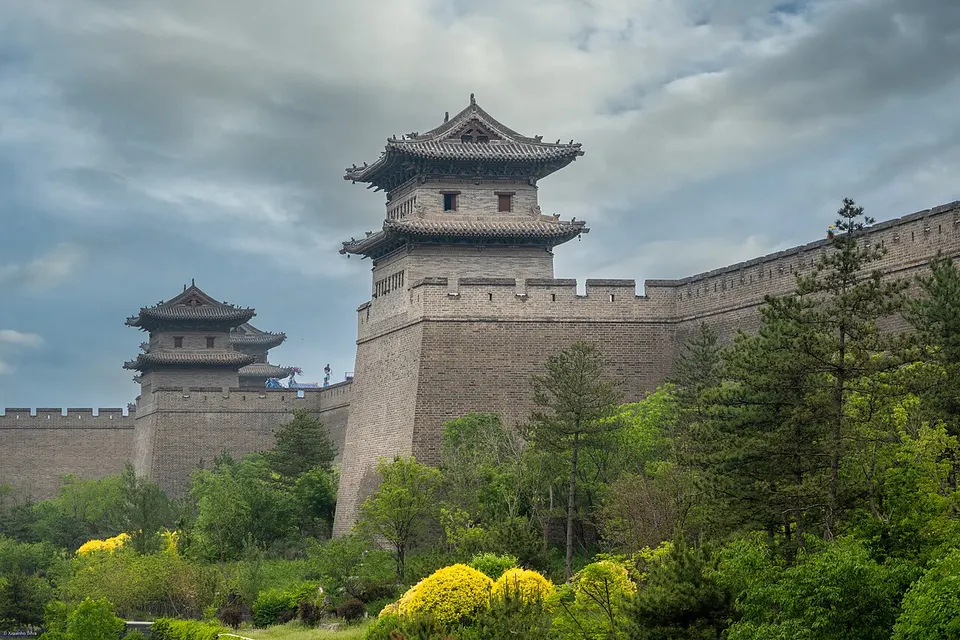
Rebuilt Ming ramparts around genuine Liao–Jin temple halls and a glazed dragon screen
- Best time
- May–Oct
- Time needed
- Most of a day
- Days to budget
- 1 day
- Stay in
- Datong
- Region
- Shanxi
- Type
- Heritage
- Listed as
- 4A scenic area
Why go to Datong Ancient City
Datong was a 5th-century capital of the Northern Wei and later the Western Capital of the Liao and Jin dynasties, and its walled old town keeps rare temple halls of the 11th and 12th centuries. Start at Huayan Temple, with its Liao sutra hall of 1038 full of clay bodhisattvas and its huge Jin main hall of 1140, then see the 45-metre glazed-tile Nine-Dragon Screen and Shanhua Temple in the south of the old city. Finish on the rebuilt ramparts, a 7.24 km circuit.
The story
When Geng Yanbo became mayor in 2008, more than 70 per cent of Datong's Ming wall survived, but only as rammed-earth ruins. The programme he launched had rebuilt the full circuit of the wall by 2016, cleared whole neighbourhoods and re-created the long-lost palace of the Ming Princes of Dai, so the ramparts, gate towers and many 'old' streets are new. Among the genuine survivals are the Liao and Jin halls of Huayan and Shanhua temples and the early Ming Nine-Dragon Screen.
What to see at Datong Ancient City
- Huayan Temple: Bojia Jiaozang Hall 薄伽教藏殿: The Liao library hall of 1038 is lined with two-storey timber bookcases topped by miniature palace pavilions, a model of Liao carpentry that Liang Sicheng called unique. Twenty-nine Liao clay figures stand on the altar, among them the smiling bodhisattva with palms together.
- Huayan Temple: Main Hall 大雄宝殿: The Jin hall of 1140 is nine bays wide and stands on a high platform, with a huge glazed ridge ornament and deep eaves. Ming statues of protective deities lean forward along its sides as if in audience, and Qing murals cover the walls.
- Shanhua Temple 善化寺: Known locally as the South Temple, it keeps a Liao main hall and three Jin buildings, among them the Hall of the Three Sages with its lotus-like bracket clusters, which Liang Sicheng admired.
- Nine-Dragon Screen 九龙壁: Built in 1392–96 for the Prince of Dai, the glazed screen is about 45 metres long and 8 metres high, with nine dragons among clouds and waves. The dragons have four claws rather than the imperial five, as befitted a prince.
- City Walls 大同城墙: The rebuilt Ming circuit can be walked on top for views over the old town's rooftops. The full circuit was closed up only in 2016, so it is a modern reconstruction on old foundations.
How to visit Datong Ancient City
Huayan Temple stands just inside the old city's west gate, Shanhua Temple near the south gate and the Nine-Dragon Screen on Heyang Street in the east, so the old city makes an easy loop on foot or by short taxi rides. Allow a morning for the two temples and the screen, then climb the walls in the late afternoon. Short on time, do Huayan Temple and the Nine-Dragon Screen and skip the walls.
How to get to Datong Ancient City
Datong South station is about 2 hours by high-speed train from Beijing (Beijing North or Qinghe) or from Taiyuan South, and the old city is about 20 minutes north by taxi.
Where to stay
Stay inside the walled old city, near Huayan Street or the Drum Tower, so the temples, the screen and the walls are all within walking distance and the evenings are lively. The high-speed station is on the far side of town, about 20 minutes by taxi.
What to eat
- Knife-cut noodles 刀削面: Ribbons shaved straight from a block of dough into boiling water and served in a savoury meat broth; Datong is one of the places most associated with the dish.
- Datong assorted hotpot 什锦火锅: A communal pot of stewed meats, tofu, vegetables and vermicelli, listed by the city's official guide for foreign visitors among its signature local dishes.
- Oil cake 油糕: Dough fried until crisp outside and soft within, a staple of northern Shanxi snack stalls.
Tips for visiting Datong Ancient City
- In Huayan Temple's sutra hall (Bojia Jiaozang Hall), look for the smiling, palms-joined bodhisattva nicknamed the 'Oriental Venus'.
- Most of Huayan Temple's sprawling complex was built in 2008–2010; the two great halls of 1038 and 1140 are the originals.
- Use the old city as a base for the Yungang Grottoes, about 30 minutes to the west, and the Hanging Temple.
Nearby
- Yungang Grottoes 云冈石窟 10 km
Giant Buddhas carved into a sandstone cliff some 1,500 years ago - Yingxian Wooden Pagoda 应县木塔 60 km
A Liao-dynasty timber pagoda of 1056, five storeys outside and nine within - Hanging Temple 悬空寺 60 km
A wooden temple pinned to a sheer cliff, seemingly propped up on stilts - Yanmen Pass 雁门关 110 km
A Ming fortress gate on the Inner Great Wall, its ramparts running up the mountain ridges
Also within 30 km: Datong Drum Tower 大同鼓楼 (under 10 km), Nine-Dragon Wall, Datong 大同九龙壁 (under 10 km), Guandi Temple, Datong 大同关帝庙 (under 10 km), Shanhua Temple 善化寺 (under 10 km), Huayan Temple, Datong 华严寺 (under 10 km), Xingguo Temple, Pingcheng 平城兴国寺 (under 10 km).
On the map
Open Datong Ancient City on the illustrated map to see the terrain around it, what else is close, and to add it to a trip and plan the days.
Open Datong Ancient City on the map